ATH-M50x vs MDR-7506 vs DT 770 PRO: Which to Buy? (2026 Comparison)
Search for "monitor headphones that work for mixing and everyday listening" and three names come up every single time: the tight-bass all-rounder audio-technica ATH-M50x, the broadcast and studio workhorse Sony MDR-7506 — essentially unchanged for over 30 years — and the long-session favorite beyerdynamic DT 770 PRO with its velour earpads.
All three are closed-back long-sellers with mountains of reviews, which ironically makes it harder to see which one fits you. Street prices also span more than a two-to-one range — roughly $99 to $179 (as of July 2026) — and the most expensive one is not automatically the right answer.
Based on each maker's official information and retailer listings as of July 21, 2026, this article compares the three on four axes — (1) mixing and beatmaking accuracy, (2) doubling as everyday listening headphones, (3) long-session comfort, (4) budget and running costs — and gives a verdict by user type.
Verdict first: the one-minute decision table
If you're short on time, here's the conclusion up front.
| Your type | The one to buy | Why |
|---|---|---|
| You want a flat reference that exposes every flaw in a mix | Sony MDR-7506 | The uncolored broadcast/studio classic. Its whole job for 30+ years has been catching problems |
| You want one pair for producing, listening and DJing | ATH-M50x | Tight, defined lows and high efficiency — it runs straight from a phone. Three detachable cables included |
| You wear headphones all day / comfort comes first | DT 770 PRO (80 ohm) | Velour earpads in a class of their own for comfort, plus strong isolation for recording |
| Budget first (US street prices) | Sony MDR-7506 | Around $99 street (July 2026) — the cheapest of the three, freeing budget for your interface or plugins |
*Prices and specs based on official information from audio-technica, Sony and beyerdynamic, plus retailer listings (checked July 2026).
1. The three characters at a glance
ATH-M50x = the tight-bass all-rounder
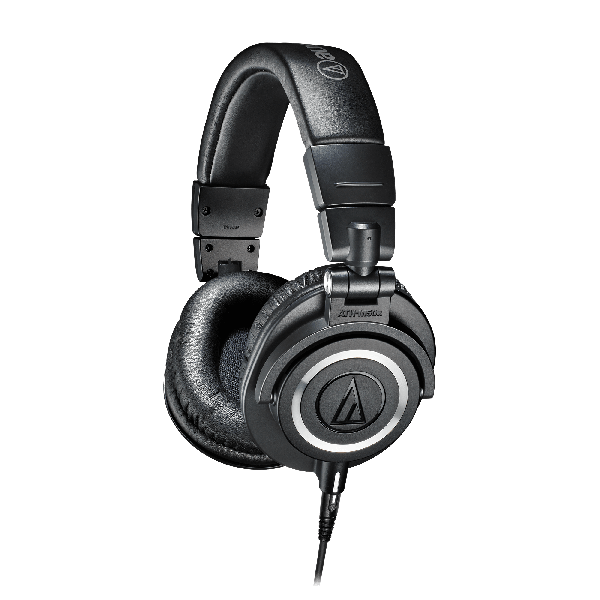
The flagship of audio-technica's M series, found in studios worldwide. Its 45mm drivers deliver tight, well-defined low end — ideal for judging how your kick and 808 separate while you build a beat. At 38 ohms and 99 dB/mW it reaches full volume straight from a phone or laptop, and it ships with three detachable cables (1.2m coiled, 3.0m straight, 1.2m straight). The earcups swivel 90 degrees for one-ear DJ monitoring. Full review: "ATH-M50x review."
MDR-7506 = the flat standard, unchanged since 1991
On sale with essentially the same design since 1991, the MDR-7506 is the default headphone of broadcast, film and studio work worldwide. With 40mm drivers, 63 ohms and 106 dB/mW sensitivity, its appeal is an uncolored, flat-leaning balance with clear, open mids and highs. Lip noise, distortion and reverb tails are easy to spot, and "if it sounds right on these, it translates" is exactly why it has survived for three decades. It folds, comes with a soft case, and its coiled cord ends in a 3.5mm mini plug with a screw-on 6.3mm adapter — more portable than its studio image suggests. Standalone review: "MDR-7506 review."
DT 770 PRO = comfort and isolation, handmade in Germany
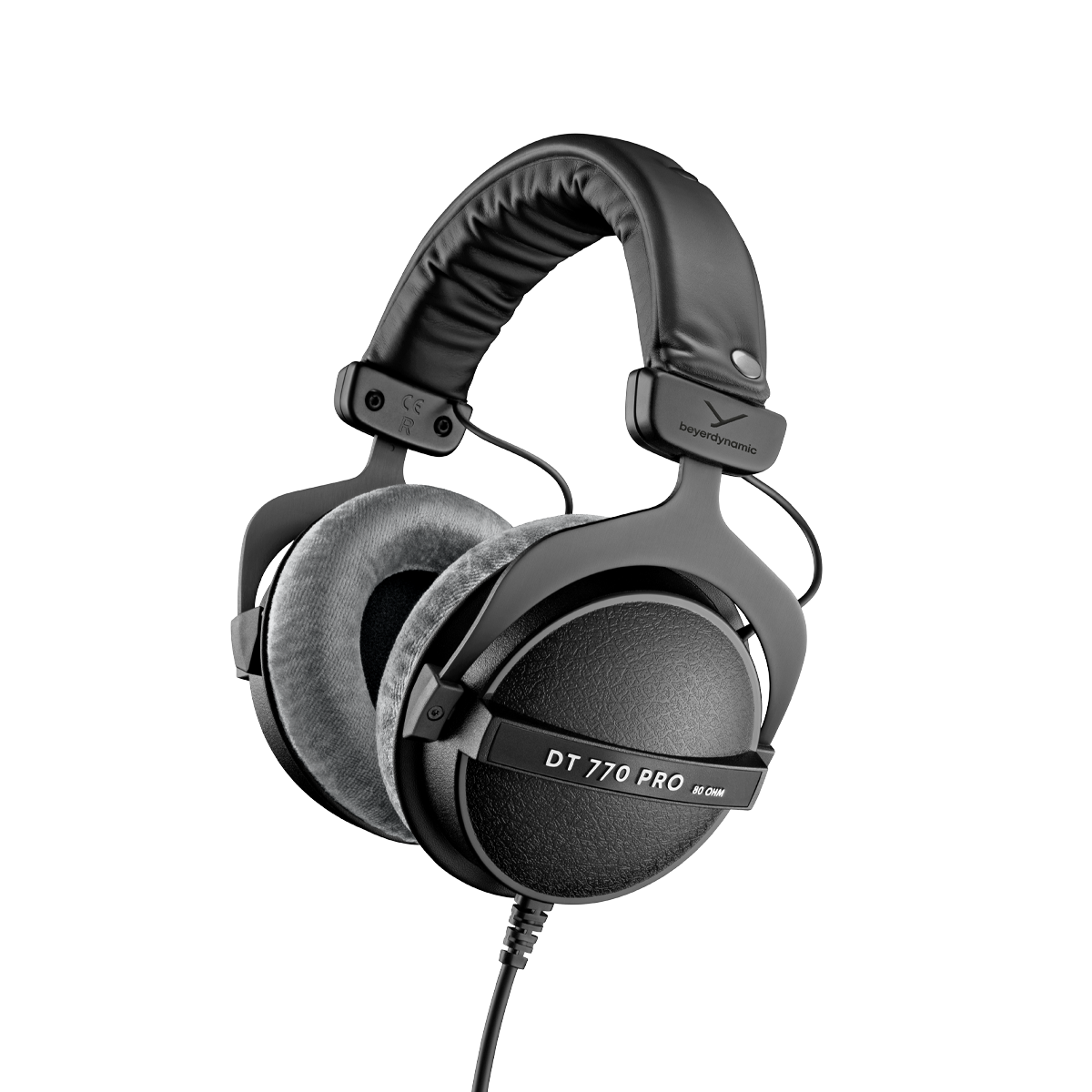
beyerdynamic's closed-back studio classic, still handmade in Germany. A 5–35,000 Hz frequency range and strong isolation make it equally at home monitoring vocal takes and inspecting the deepest part of the low end. Its biggest weapon is long-session comfort from velour earpads and a soft-padded headband. It comes in 32, 80 and 250 ohm versions; for production through an interface, the 80 ohm version is the standard pick. Every part is replaceable, so one pair can serve for a decade or more. Full review coming: "DT 770 PRO review."
2. Specs and price comparison (as of July 2026)
| Item | ATH-M50x | Sony MDR-7506 | DT 770 PRO (80 ohm) |
|---|---|---|---|
| Type | Closed-back dynamic | Closed-back dynamic | Closed-back dynamic |
| Driver | 45mm | 40mm | Not listed in official specs |
| Frequency response | 15–28,000 Hz | 10–20,000 Hz | 5–35,000 Hz |
| Impedance | 38 ohms | 63 ohms | 80 ohms (32/250 ohm versions available) |
| Sensitivity | 99 dB/mW | 106 dB/mW | 96 dB |
| Weight | Approx. 285 g (without cable) | Approx. 230 g (without cable) | 270 g (without cable) |
| Cable | Detachable, 3 included (1.2m coiled / 3.0m straight / 1.2m straight) | Fixed coiled cord, 3.5mm mini plug + 6.3mm adapter | Fixed, single-sided (6.3mm adapter) |
| Folding / extras | Folds, pouch included | Folds, soft case included | No folding (bag sold separately) |
| Earpads | Pleather (spares widely available) | Pleather (replaceable) | Velour (replaceable, EDT 770 V) |
| Straight from a phone | Excellent (high efficiency) | Good (mini plug, high sensitivity) | Limited (interface recommended) |
| Price guide | Around $144–$169 US street; approx. 19,580 yen+ in Japan (July 2026) | Around $99 US street; approx. 12,980 yen in Japan (July 2026) | Around $144–$179 US street; approx. 23,000–29,000 yen in Japan (July 2026) |
*Specs from the official audio-technica, Sony (pro audio) and beyerdynamic sites (Japanese distributor Media Integration); prices from retailer listings in the US and Japan (all checked July 21, 2026). Prices move, so check the store page for the latest.
3. Comparison 1: mixing and beatmaking accuracy
If what you want is a reference — "how will this mix sound everywhere else?" — the MDR-7506's flat-leaning balance is the most honest answer. Its clear mids and highs expose vocal noise, harshness and sloppy reverb decisions instantly, which is why it has spent decades as the industry's designated fault-finder. Low-end quantity is modest: it listens with precision, not excitement.
If your production revolves around 808s and kicks, the ATH-M50x's tight low end becomes the better tool: bass stays defined instead of blooming, so kick/808 masking and sidechain behavior are easy to judge. The DT 770 PRO reads deeper into the lows than either (5–35,000 Hz) and its isolation makes it a safe choice for monitoring vocal and rap takes. For the craft side of low end, see "how to mix 808s."
4. Comparison 2: doubling as everyday listening headphones
If you're only going to own one pair — for the studio, the commute and everything in between — the ATH-M50x is the clear leader.
- ATH-M50x: high efficiency (38 ohms, 99 dB/mW) means full volume from a phone, three swappable cables, a folding frame — and a monitor sound that is still genuinely fun to listen to. There's a reason it became the default "producer's daily driver."
- MDR-7506: at 106 dB/mW it's actually the easiest to drive, and the mini plug goes straight into anything. At about 230 g it's also the lightest. Just remember its character is "verification, not pleasure" — casual listeners may find it lean.
- DT 770 PRO (80 ohm): designed around an audio interface or headphone amp; straight from a phone it won't show its best. There is a 32 ohm version for portable use, but realistically this is the pair that lives on your desk.
5. Comparison 3: long-session comfort
This one belongs to the DT 770 PRO, and it isn't close. The velour earpads on the 80 and 250 ohm versions stay cool and soft against the skin, and combined with the padded headband the effect is often described as "forgetting you're wearing them." Over multi-hour mixing sessions — especially in summer — the difference is obvious. When pads wear out, official replacements (EDT 770 V and others) keep the comfort factory-fresh.
The MDR-7506 is the lightest of the three at about 230 g, so head fatigue is low, but its pleather pads run warm and will eventually flake with age — plan on replacement pads as routine maintenance. The ATH-M50x prioritizes isolation, which means a firmer clamp; on long sessions your ears feel it first. Break-in tricks and pad swaps help a lot — see the "ATH-M50x review" for details.

6. Comparison 4: budget and running costs
On upfront cost, the MDR-7506 at around $99 wins outright. The $50–$80 you save versus the other two is real gear money — a better audio interface tier, or a plugin you'll actually use. "Reference on the 7506, invest the rest in the studio" is a genuinely rational split.
Factor in the long run and the picture shifts. The DT 770 PRO is the most expensive at around $144–$179, but it's handmade in Germany with every part replaceable — amortized over a decade of pad and headband swaps, it can end up the cheapest per year. The ATH-M50x counters with three included cables and an abundant spare-parts ecosystem, so a frayed cable or crushed pad never means a new purchase. And since the MDR-7506 is so affordable, even "replace it when it wears out" is a sane strategy. There is no wrong budget path here. For planning the rest of your setup, see "how to choose an audio interface."
7. Verdict: recommendations by type
Who the ATH-M50x suits
- You want producing, DJing and listening covered by one pair
- You build beats around kick and 808 definition
- You want the same headphones on your desk and in your bag
Who the MDR-7506 suits
- You want a flat reference standard for the least money
- You value fault-finding precision on vocals and noise above excitement
- You'd rather put the savings into your interface or plugins
Who the DT 770 PRO suits
- You mix or edit for hours at a stretch, headphones on the whole time
- You need strong isolation for tracking vocals
- You want one pair you can maintain and keep for a decade
All three are world-standard closed backs, so references, spare parts and community knowledge are never a problem. The fork in the road is versatility (M50x), reference (MDR-7506), or comfort (DT 770 PRO). Picture how your actual weekly studio hours break down, and buy the pair that carries the biggest share. For a comparison that includes Japan's studio standard MDR-CD900ST, see "Monitor Headphones Compared: M50x, CD900ST & DT 770 PRO."
Frequently asked questions
Q1. Which should a beginner producer buy first?
If you want one pair for producing, listening and DJing, the ATH-M50x is the strongest pick: at 38 ohms and 99 dB/mW it runs fine straight out of a phone, and three detachable cables are included. If you want a flat reference on the smallest budget, the Sony MDR-7506 — around $99 street (July 2026) — is the classic broadcast and studio standard.
Q2. DT 770 PRO: should I get the 32, 80 or 250 ohm version?
For music production through an audio interface, the 80 ohm version is the standard choice. The 250 ohm version suits high-output gear and headphone amps, while the 32 ohm version is easier to drive from phones and portable devices. Prices and comparisons in this article are based on the 80 ohm version.
Q3. How is the MDR-7506 different from Sony's MDR-CD900ST?
Both are closed-back Sony classics. The MDR-7506 folds, has a coiled cord ending in a gold-plated 3.5mm mini plug with a screw-on 6.3mm adapter, and is the standard in broadcast and studios worldwide. The MDR-CD900ST is the Japanese studio standard, with a fixed 6.3mm plug and no folding mechanism — a stay-in-the-studio design. As a first pair for home production, the MDR-7506 is the more practical of the two.
Q4. Which of the three can I drive straight from a phone or laptop?
The ATH-M50x (38 ohms, 99 dB/mW) and MDR-7506 (63 ohms, 106 dB/mW) are efficient enough to reach usable volume from a phone or laptop, and the MDR-7506 plugs straight in with its mini plug. The DT 770 PRO in 80 and 250 ohm versions assumes an audio interface or headphone amp; if you mostly plug into portable devices, consider the 32 ohm version.
Summary
The 2026 monitor-headphone classics split cleanly into "versatile (ATH-M50x)," "reference (MDR-7506)" and "comfortable (DT 770 PRO)" — and anywhere you land in the roughly $99–$179 street range (July 2026), you get a pair that decades of studio use have already de-risked. If you're still torn, scroll back to the decision table and answer honestly about where your hours actually go. And if you finish mixes on headphones alone, run your bounce through the free dynamics checker (loudness / LUFS) afterward — objective numbers catch what any room, or any headphone, can hide.