Sony MDR-7506 Review (2026): 35 Years as the World's Studio Standard
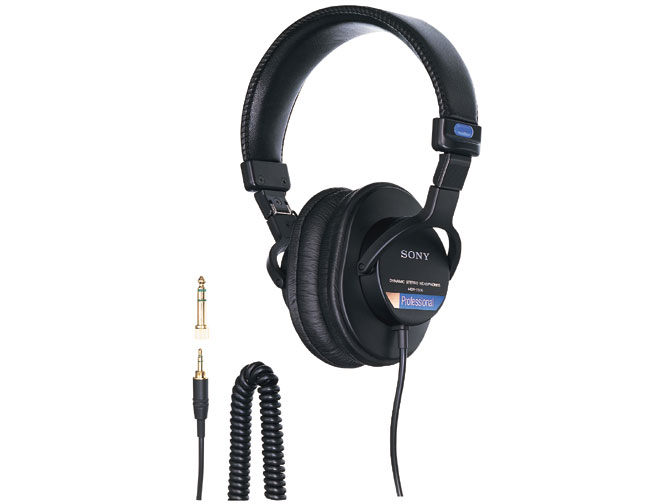
Image: Sony (official product page)
Launched in 1991, the Sony MDR-7506 turns 35 in 2026 — and it is still hanging in broadcast booths, recording studios and film sets all over the world, with its basic design essentially unchanged.
Known as the "blue band" for the blue ring on its earcups (its Japanese sibling, the studio-standard MDR-CD900ST, wears red), it has earned a reputation summed up in the saying "900ST in the East, 7506 in the West." If you are starting out in production or beatmaking and want one trustworthy reference headphone without blowing the budget, a world standard at around $99 street (July 2026) should be the first thing you audition.
In this review, the Beat Lab editorial team draws on Sony's official information and retailer listings (checked July 2026) to explain why the MDR-7506 has stayed the default for 35 years, how to choose between it and the ATH-M50x, and how to keep one alive for a decade with our wear-and-tear parts replacement cheat sheet.
MDR-7506 specs at a glance
First, the numbers. For a 1991 design, they line up surprisingly well with a modern home-studio setup.
| Type | Closed-back dynamic (over-ear) |
|---|---|
| Driver | 40mm dome type (neodymium magnet) |
| Frequency response | 10–20,000 Hz |
| Impedance | 63 ohms |
| Sensitivity | 106 dB/mW |
| Power handling | 1,000 mW |
| Weight | Approx. 230 g (without cord) |
| Cord | Single-sided coiled cord (approx. 1.2m, extends to approx. 3.0m), OFC litz wire, non-detachable |
| Plug | Gold-plated 3.5mm mini plug + screw-on 6.3mm adapter included |
| Folding / extras | Folds flat; soft carrying case included |
| Price guide | Around $99 US street; approx. 12,980 yen in Japan |
*Specs from Sony's official (pro audio) information and authorized retailer listings; prices from US and Japanese retailer listings (all checked July 2026). Prices move with sales and stock.
The headline number is the 106 dB/mW sensitivity. The 63-ohm impedance looks demanding on paper, but in practice the 7506 reaches full working volume straight out of a phone or laptop — and since the cord ends in a 3.5mm mini plug, it goes into consumer gear with no adapter at all. Before you even own an audio interface, it just works.
Why it has stayed "the reference" for 35 years
🎛️ An uncolored, flat-leaning balance
The 7506's whole identity is an honest, flat-leaning sound that refuses to flatter any one band. Low-end quantity is modest — this is not a headphone that excites. In exchange, the mids and highs are clear and open: vocal lip noise, sloppy edits and reverb tails you forgot to tame are all instantly audible.
"If it sounds right on these, it translates everywhere else" — that is the trust broadcast and studio professionals have built over 35 years of daily use, and it is the single biggest thing you are buying. As a designated fault-finder for final mix checks, almost nothing on the market carries this much accumulated proof.
📺 Field-proven practicality from broadcast and film work
The 7506 earned its keep outside the control room too — on location recording rigs and film sets. It folds into its pouch, the coiled cord stays off the floor and stretches when you move, the gold-plated two-way plug covers both mini and 6.3mm jacks, and the headband adjusts on a clicked, numbered slider. Everything about it is built for "grab it, take it, rely on it."
🪶 About 230 g, and easy to wear for hours
At roughly 230 g without the cord, it is one of the lightest of the classic monitors. Clamping force is moderate, the pads cover the whole ear, and isolation is good — comfortable for long monitoring sessions, vocal tracking, and late-night work alike.
MDR-7506 or ATH-M50x?
The most common dilemma in this price bracket is "7506 or M50x?" The short answer: M50x for versatility, 7506 for reference accuracy and price.
| Item | Sony MDR-7506 | ATH-M50x |
|---|---|---|
| Sound character | Flat-leaning, open mids/highs — a "verification" tool | Tight low end, fun to listen to — an all-rounder |
| Best at | Mix fault-finding, vocal cleanup, noise checks | Beatmaking (kick/808 definition), DJing, doubling for listening |
| Cable | Fixed coiled cord (approx. 1.2m, extends to approx. 3.0m) | Detachable, 3 included (1.2m coiled / 3.0m straight / 1.2m straight) |
| Weight | Approx. 230 g | Approx. 285 g |
| Price guide | Around $99 US street (July 2026) | Around $144–$169 US street (July 2026) |
The $50–$70 you save is real gear money: a plugin you will actually use, or a step up in audio-interface tier. "Reference on the 7506, invest the difference in the studio" is the rational split when you are starting out on a budget. If instead you will own exactly one pair for producing, DJing and the commute, the M50x with its three detachable cables is the stronger pick. See our "ATH-M50x review" and the full "three-way comparison with the DT 770 PRO."
"Flat" is boring — and it is what pays the bills
The first time you put on a 7506, you may honestly think "that's it?" No thumping bass, no sparkling top end. But if you make beats to sell, that restraint is exactly the point.
- Fewer translation surprises: mixes built on hyped headphones fall apart on phone speakers and car stereos. Build on a flat reference and your balance survives the trip.
- Faster decisions: kick/808 masking, harsh vocals, muddy reverb — the flaws are simply audible, so you decide from evidence instead of vibes.
- References that actually work: because the same model sits in studios worldwide, studying professional tracks on a 7506 is ear training in itself.
If you finish mixes on headphones alone, run your bounce through the free dynamics checker (loudness / LUFS) afterward — objective numbers catch what any single pair of headphones can hide.
The wear-and-tear parts replacement cheat sheet — running a 7506 for 10 years
Because the 7506 is mechanically simple and tough, "replace the consumables, keep the headphone for a decade" is a completely realistic plan. Every unit eventually goes through pleather-pad decay, so here is the whole maintenance picture in one table.
| Part | Typical symptom / timing | Fix / replacement part | Cost guide | Difficulty |
|---|---|---|---|---|
| Earpads (pleather) | Surface cracks, then black flakes everywhere. Roughly 2–3 years of use | Stretch-fit, replaceable at home. Genuine Sony parts (ordered per ear) or the many third-party pads marketed for the CD900ST/7506/V6 family | Genuine from around $10+ per ear; third-party pairs roughly $10–$25 | Low (no tools) |
| Headband skin | Pleather peeling and stickiness; usually later than the pads | Slip-on headband covers protect it; fitting one before the damage shows extends life dramatically | A few dollars to around $12 | Low (slips on) |
| Coiled cord | Broken conductor or crackling at the strain relief (sound cutting out on one side) | The cord is fixed, so no user-swappable cable. Contact a Sony service center, or treat DIY re-soldering as at-your-own-risk (voids warranty) | Repair quote dependent | High |
| 6.3mm screw-on adapter | Easily lost (it unscrews by design) | Buy a spare screw-on type adapter | A few dollars | — |
| Driver / housing | Distortion or rattle (rare) | Compare the repair quote with the ~$99 street price; on an old unit, replacement is often the cheaper path | — | — |
*Cost guides based on typical online-retail pricing as of July 2026. Check Sony service channels and authorized dealers for genuine-part availability and pricing.
Two takeaways. First: pad decay is scheduled maintenance, not a defect. Second: the fixed coiled cord is the one true weak point, and its lifespan mostly depends on how you treat the strain relief — never yank the plug out by the cable, never wrap the cord around the headphone. Get those two habits right and the ~$99 investment amortizes over a decade; engineers who have kept the same unit alive for 10+ years on nothing but pad swaps are not hard to find.
The honest downsides — it is not for everyone
Thirty-five years of service does not erase the weak spots. Here they are, plainly.
- Not much listening pleasure: low-end quantity is modest; it listens with precision, not excitement. As your main commute headphone it will likely feel lean.
- The cable is not replaceable: a broken cord means a repair job, not a $20 spare. Next to the M50x's three detachable cables, this is the design's clearest sign of age.
- Pleather pads run warm and will decay: expect summer sweat and, eventually, flaking — plan on the replacement-pad routine from the table above.
- The rated 10–20,000 Hz range is conservative: if you need to see the very bottom of your sub-bass, a 5–35,000 Hz option like the DT 770 PRO exists. How the three classics divide the work is covered in "ATH-M50x vs MDR-7506 vs DT 770 PRO."
Frequently asked questions
Q1. How is the MDR-7506 different from Sony's MDR-CD900ST?
Both are closed-back Sony classics. The MDR-7506 folds, has a coiled cord ending in a gold-plated 3.5mm mini plug with a screw-on 6.3mm adapter, and is the standard in broadcast and studios worldwide. The MDR-CD900ST is the Japanese studio standard, with a fixed 6.3mm plug and no folding mechanism — a stay-in-the-studio design. As a first pair for home production, the MDR-7506 is the more practical of the two. For a comparison including Japan's standard, see "Monitor Headphones Compared."
Q2. Can it run straight from a phone or laptop?
Yes. At 63 ohms and 106 dB/mW it is very easy to drive, reaching usable volume straight from a phone or laptop. The mini plug goes directly into consumer gear, and the screw-on 6.3mm adapter covers studio equipment.
Q3. Are the earpads replaceable, and how long do they last?
Yes. The pleather pads typically start cracking and flaking after roughly 2–3 years. They stretch on and off without tools, and both genuine Sony parts and third-party CD900ST/7506/V6-family pads are widely available. See the replacement cheat sheet above for the full picture.
Q4. MDR-7506 or ATH-M50x?
For a flat fault-finding reference at the lowest price, the MDR-7506 (around $99 street, July 2026). For one pair covering producing, listening and DJing, the ATH-M50x (around $144–$169 street, July 2026), with its tight low end and three included detachable cables.
Verdict: $99 buys you 35 years of proof
The Sony MDR-7506 does not sell on excitement. It sells on the fact that around $99 buys the exact reference that the world's broadcast and studio professionals have been stress-testing for 35 years — and in 2026 that is still one of the best value propositions in monitoring.
If you want sharper mix decisions, a safe and cheap first monitor headphone, or a tool you can maintain for a decade instead of replacing, the MDR-7506 remains an easy recommendation.