[Closed-Back] Monitor Headphones Compared: ATH-M50x, MDR-CD900ST & DT 770 PRO
Start shopping for monitor headphones and three names come up almost every time: the ATH-M50x, the MDR-CD900ST and the DT 770 PRO. And because all three are standards, plenty of people end up asking the same thing — "so what's actually different?"
The answer: their strengths split along surprisingly clear lines. Roughly speaking, the M50x is the all-rounder, the CD900ST is built for tracking, and the DT 770 PRO is built for mixing. Pick one just because "it's the standard" and you can easily end up with a pair that doesn't match how you work — and buying again.
Here, the Beat Lab editorial team compares these three closed-back models using specs confirmed from each manufacturer as of July 7, 2026, and lays out which one fits which job: beatmaking, home recording, mixing. (We'll cover open-back models in a separate article.)
Starting point: all three are closed-back
All three pairs here are closed-back dynamic designs that enclose the ear. Closed-back isolation keeps click tracks from bleeding into the mic while you record, which is why these tend to be the pair people buy first. Open-back designs win on soundstage and naturalness, but they leak too much to use while tracking. Start with one closed-back pair, add an open-back pair for mixing when you need it — that's the usual order.
The other thing to check is impedance (ohms). The higher the number, the more power it takes to drive them, and the harder it gets to reach volume straight out of a phone. Whether you're running an audio interface changes which model makes sense.
The character of each model
audio-technica ATH-M50x: the all-rounder that does everything
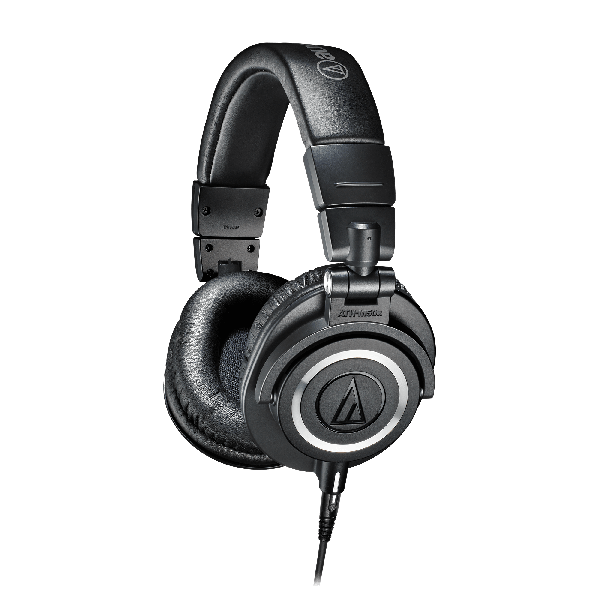
The ATH-M50x is the pair people describe as "the one that never leaves you stuck." Neither the bass nor the treble has any extreme character, so it covers beatmaking, DJing and everyday listening without complaint. The 45mm drivers give bass with clear definition, but the voicing stays restrained.
Its high efficiency — 38-ohm impedance, 99dB/mW sensitivity — means you can get plenty of volume plugged straight into a phone or laptop. That matters more than it sounds: you can use these before you own an audio interface. The housing rotates 90 degrees for single-ear monitoring, and it ships with three detachable cables (1.2m coiled, 3.0m straight, 1.2m straight). Street price sits around, or a little above, 20,000 yen.
Our take: if you're buying just one pair to start with, we'd point you at the ATH-M50x first. It clears the bar in every use case, which makes it hard to get wrong while you're still figuring out what you actually prioritize. Full details in our ATH-M50x review.
SONY MDR-CD900ST: the "common language" of Japanese studios
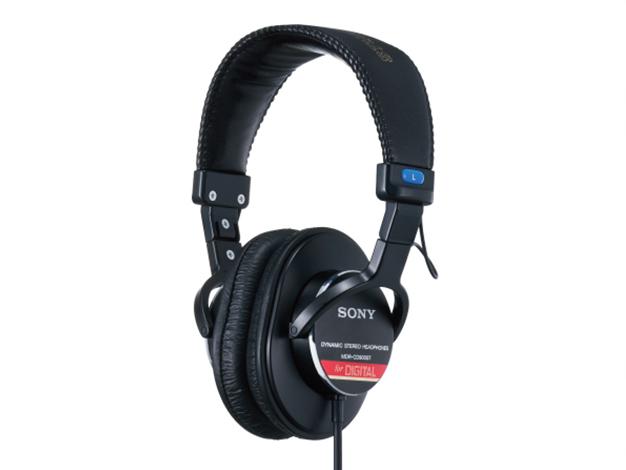
A model long used as the standard in Japanese recording studios. With 40mm drivers, 63 ohms and 106dB/mW sensitivity, its frequency response runs 5–30,000Hz. At about 200g (including cord) it is the lightest of the three, so it stays comfortable through sessions where takes pile up for hours.
The voicing leans hard into midrange and treble clarity. You can hear lip noise and the consonants of lyrics in fine detail, which is exactly why it pairs so well with vocal and rap tracking. That said, there are caveats worth knowing before you buy.
- The cable is a fixed 2.5m type and the plug is a 6.3mm stereo standard plug. A 3.5mm jack on a phone needs an adapter.
- It does not fold and comes with no pouch or extras. There is no warranty repair period set, so all repairs are paid (stated officially — though it is designed to be repaired and have parts replaced individually for long-term use).
- Low-end body is restrained, making it less suited to checking 808 weight or to casual listening.
What you get in exchange is just as clear, though: its midrange and treble accuracy is trusted enough that recording rooms still treat it as the reference. Being able to check your own takes through the same ears as a Japanese studio is something only this pair offers. The Sony Store price is 24,860 yen including tax; in shops it currently moves around 19,800 yen (per our editorial research as of July 2026).
Our take: if rap or vocal recording is the center of your workflow, the CD900ST is still a safe pick. If you want one pair that doubles for listening, though, the restrained low end will disappoint — treat it as a dedicated tracking pair and you'll be much happier with it.
beyerdynamic DT 770 PRO: comfort and monitoring for long sessions
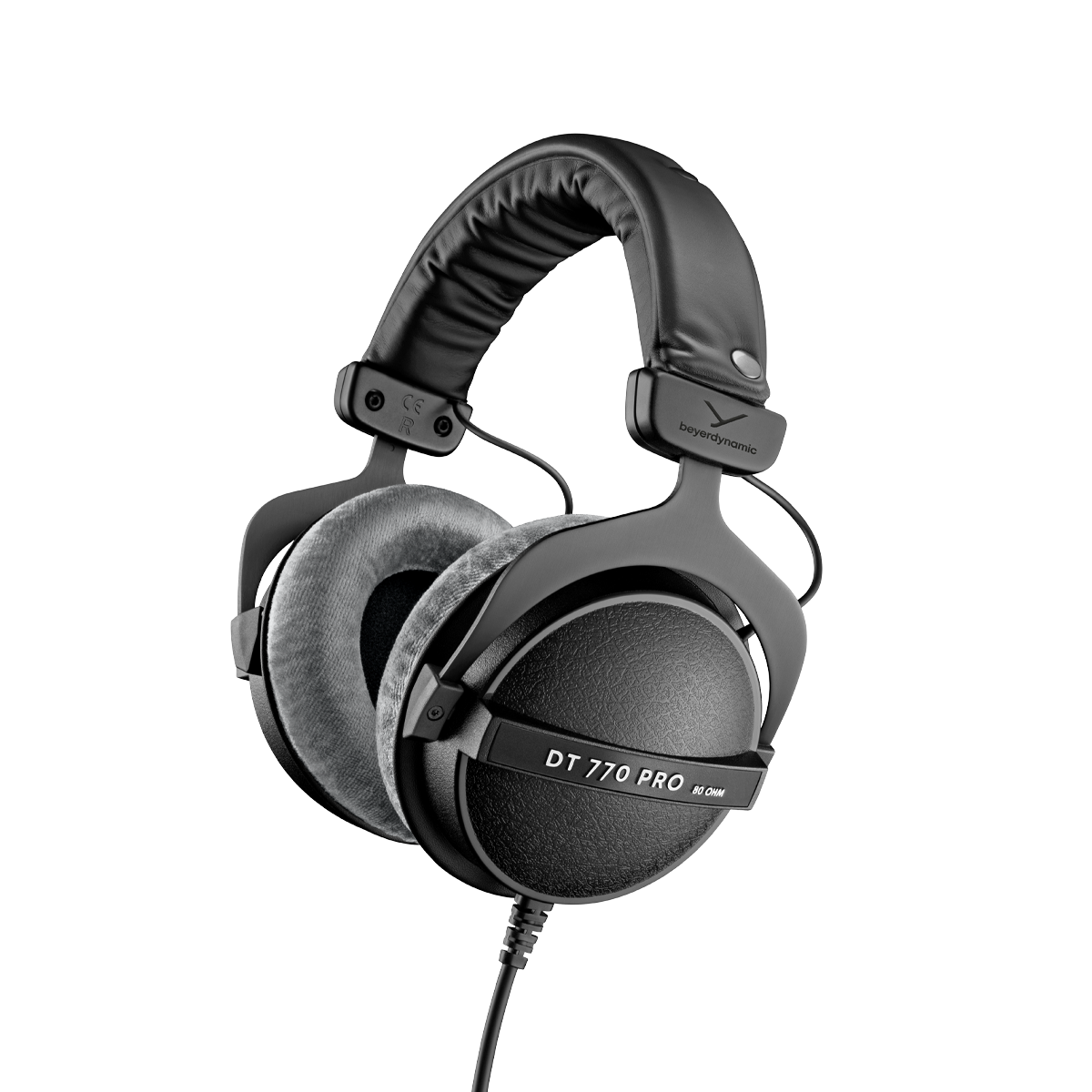
A closed-back staple from the long-established German maker beyerdynamic. With a 5–35,000Hz frequency response and 96dB sensitivity, you can pick from three variants: 32, 80 and 250 ohms to match your setup. For DTM, the 80-ohm version built around an interface connection is the standard choice.
But the thing you can't leave out of any description of this pair is how it wears. The velour-style earpads on the 80-ohm and 250-ohm versions explain why so many people say they chose these purely for comfort. Your ears don't start hurting after several hours of mixing, and the longer your sessions run, the more that difference registers. Mass is 270g (80-ohm version, excluding cable). The cable is fixed; if you want detachable, there's the derivative "DT 770 PRO X." The 80-ohm version currently runs roughly 22,800–28,700 yen (per our editorial research as of July 2026).
Our take: the longer you spend mixing, the more you'll feel what the DT 770 PRO's comfort buys you. Flip that around and if you're mostly tracking, with headphones on for short bursts, that strength barely comes into play. "How much of my time is sitting and grinding on a mix?" is the question that decides this one.
Official spec comparison (as of July 7, 2026)
| Item | ATH-M50x | MDR-CD900ST | DT 770 PRO |
|---|---|---|---|
| Type | Closed-back dynamic | Closed-back dynamic | Closed-back dynamic |
| Driver diameter | 45mm | 40mm | Not listed in official specs |
| Impedance | 38Ω | 63Ω | 32Ω / 80Ω / 250Ω |
| Sensitivity | 99dB/mW | 106dB/mW | 96dB |
| Frequency response | 15–28,000Hz | 5–30,000Hz | 5–35,000Hz |
| Mass | Approx. 285g (excl. cord) | Approx. 200g (incl. cord) | 270g (80Ω, excl. cable) |
| Cable | Detachable, 3 included | Fixed 2.5m | Fixed (80Ω ships with 3.5mm + 6.35mm adapter) |
| Street price (guide, incl. tax) | from ~20,000 yen | ~19,800 yen (Sony Store 24,860 yen) | from 22,800 yen (80Ω) |
*Specs confirmed on each manufacturer's official site (audio-technica.co.jp / sony.jp / beyerdynamic) on July 7, 2026. Prices are a guide based on research the same day (kakaku.com, Sound House, Sony Store, etc.) and will vary. The DT 770 PRO driver diameter is not listed in the official specs, so it is omitted.
Laid out side by side, the roles separate cleanly.
- The ATH-M50x is the all-rounder (high efficiency, works in any setup)
- The CD900ST is for tracking (light weight and midrange resolution pay off while recording)
- The DT 770 PRO is for mixing (comfort built for staying seated)
Below, we lay out who each one suits.
Conclusion: recommendations by use case
- A first pair / all-round use / doubling as DJ headphones → ATH-M50x. High efficiency means it works even plugged straight into a phone, and with three cables included it suits any situation.
- Mainly vocal and rap recording / wanting the same reference as Japanese studios → MDR-CD900ST. Its resolution for noise checking and light weight are the strengths. But with a fixed standard-plug cable, treating it as a stay-at-desk pair is realistic.
- Prioritizing comfort in long mixing sessions → DT 770 PRO (80Ω). The velour-pad comfort and wide frequency response suit sitting and listening in for long stretches.
Whichever you choose, the reassurance of "plenty of information and references because it's a standard" is common to all three. If you finish a mix on headphones alone, running a dynamics analysis (loudness / LUFS check) after export gives you objective numbers too, reducing judgment errors caused by your environment.
Frequently asked questions
Q1. Can I plug the MDR-CD900ST straight into a phone or audio interface?
A. Because its plug is a 6.3mm stereo standard plug, a 3.5mm mini jack needs an adapter. It connects directly to the standard jack of an audio interface. The cable is a fixed 2.5m type.
Q2. For the DT 770 PRO, should I pick 32, 80 or 250 ohms?
A. For DTM and beatmaking through an interface, 80 ohms is the standard. The 250-ohm version suits high-output gear or headphone amps, and the 32-ohm version is easier to drive to volume on portable devices.
Q3. If I'm buying my first pair, which one should I get?
A. If you're undecided, the ATH-M50x. Its high efficiency means you don't need an audio interface to drive it, and it handles tracking, mixing and everyday listening alike. While you're still working out what you prioritize, it's the hardest one to get wrong.
Q4. Can I use these for DJing?
A. The ATH-M50x, yes. The housing rotates 90 degrees for single-ear monitoring and you can get volume straight out of a phone. The CD900ST is a different story: a fixed cable with a 6.3mm plug and no folding design make it a poor fit for carrying to gigs.
Q5. Can I use them just for listening to music?
A. The ATH-M50x and DT 770 PRO are both enjoyable for everyday listening. The CD900ST leans toward midrange and treble with restrained low end, so most people find it underwhelming for pleasure listening. If you want one pair for production and listening both, pick from the other two.
Q6. Torn between the ATH-M50x and the MDR-CD900ST?
A. For one pair covering a wide range, the ATH-M50x; for vocal-recording noise checks or Japanese-studio compatibility, the MDR-CD900ST. Since the CD900ST has restrained low-end body, the M50x is likely easier to balance on for 808-centric production.
Q7. Do I not need an open-back pair?
A. Closed-back is fine for a first pair. Open-back designs win on soundstage but leak too much to monitor with while recording. Adding one later as a mixing-only second pair is the usual path.
Summary
If you're stuck, this is the shortlist that keeps you from going badly wrong.
- First pair: ATH-M50x
- Recording-focused: MDR-CD900ST
- Mixing-focused: DT 770 PRO (80Ω)
All three are standards for a reason, and none of them is a dud. What actually decides it isn't the numbers in the spec table — it's where most of your production time goes. More tracking, or more hours sitting and grinding on a mix? Answer that and the right pair picks itself.
If you want to lift the quality of the recorded sound itself, our dbx 286s (channel strip) review is worth a look too.