Shure SM7B Review: The Go-To Rap Vocal Mic and How to Solve Its Gain Problem
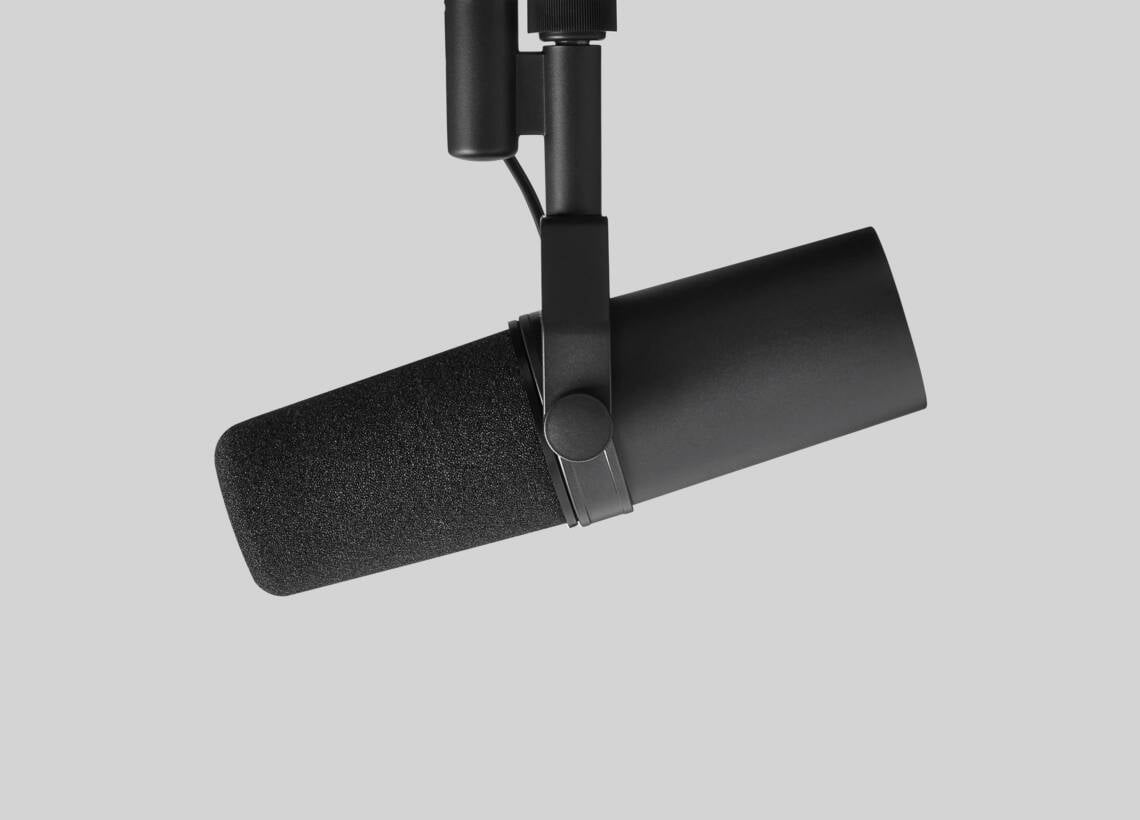
One microphone has held the "default" spot in rap and hip hop vocal recording — and in streaming and podcasting — for years: the Shure dynamic mic SM7B. If you've watched type beat artists or pro rappers track vocals, you've seen that thick black body. Its predecessor, the SM7, is famous for being used on Michael Jackson's "Thriller" vocals; this is, in short, the reigning king of rap vocal mics.
There is a catch, though. Plug an SM7B straight into an audio interface without knowing what you're doing and you will very likely hit the "why is it so quiet?" problem (insufficient gain). In this article, the Beat Lab editorial team reviewed the official Shure site (shure.com) as of July 20, 2026, and lays out what the SM7B does well, how to solve the gain problem before you buy, and what a complete setup actually costs.
What kind of mic is the Shure SM7B?
The SM7B is officially described by Shure as a "cardioid dynamic vocal microphone." Born from a broadcast-studio lineage, it has a flat, wide-range frequency response (50Hz–20kHz) known for capturing the voice with a smooth, warm tone.
What makes it special is that the countermeasures home recordists usually have to buy separately are built into the mic. It has an air-suspension shock isolator (against vibration) and a pop filter (against plosives) inside, ships with the larger A7WS close-talk windscreen, and carries advanced shielding against electromagnetic hum from computer monitors and studio gear. The yoke mount is integrated too, so you can get running without adding a shock mount or pop shield.
As of July 2026 it is still listed as a best seller on the official Shure site — one of the few microphones that people continue to buy by name decades on.
Four reasons the SM7B is the pick for rap vocals and streaming
1. It's a dynamic mic, so it doesn't care about your room
This is the biggest reason home-recording rappers choose it. Sensitive condenser mics in an untreated room pick up reflections, the AC, PC fans and traffic outside. The low-sensitivity dynamic SM7B focuses on the voice at the capsule and keeps room ambience and background noise out of the take, which makes practical rap recording possible in an ordinary bedroom with no vocal booth.
2. It holds up at point-blank range
Rap vocals are usually tracked close to the mic. With its internal pop filter plus the included windscreens, the SM7B resists plosives and breath noise, and it is designed to keep distortion low even with loud sources. From aggressive delivery to whisper-style takes, it's built for working a few centimeters from the grille.
3. Bass roll-off and presence boost switches
Switches on the back let you engage a bass roll-off (to tame proximity-effect mud) and a mid-range presence boost (to push the voice forward). You shape the contour of the vocal at the recording stage, so the raw take already sits better in the beat before mixing.
4. It doubles for streaming and podcasting as-is
Resistant to ambient noise and iconic on camera, the SM7B is an established staple among streamers and podcasters. Buy it for tracking vocals and the same mic covers your beatmaking streams and YouTube content.
The "gain problem" you must know about before buying
Here is the SM7B's one real hurdle. Its output level (sensitivity) is a low -59dBV/Pa, and Shure's official support guidance recommends a mic preamp with about +60dB of clean gain to reach a healthy recording level at normal speaking volume. Many entry-level audio interfaces only offer preamps in the 50dB range — so plugged in directly, you get "gain maxed out and still quiet," or hiss when you push the last few dB.
There are three main ways to solve it.
- 1. Choose a high-gain interface: recent interfaces have raised the bar — the Focusrite Scarlett 4th Gen, for example, offers 69dB of preamp gain (manufacturer spec), enough to drive the SM7B directly. See our audio interface guide for picking one.
- 2. Add an inline booster: the classic move is placing a mic booster such as the Cloudlifter CL-1 (+25dB) or TRITON AUDIO FetHead between the mic and the interface for clean extra gain. The booster is powered by your interface's +48V phantom power.
- 3. Use a channel strip / external preamp: the dbx 286s we reviewed delivers up to +60dB of mic gain and lets you shape the take with its compressor and de-esser on the way in — a natural partner for the SM7B.
Shure also now sells the SM7dB, a variant with a built-in active preamp switchable between +18dB and +28dB (bypassable). It solves the gain problem inside the mic if you'd rather not add gear, but it costs more than the standard SM7B at street price.
Setup cheat sheet: do you need a booster?
| Your current setup | Extra gear | Signal chain |
|---|---|---|
| Interface with 60dB+ of gain (e.g. Scarlett 4th Gen, 69dB) | None | SM7B → interface → computer |
| Interface with gain in the 50dB range (common on entry / older models) | Inline booster (around +25dB) | SM7B → booster (+48V on) → interface → computer |
| You own a channel strip (dbx 286s etc.) | None | SM7B → 286s (mic in) → interface line input → computer |
| You don't want more gear | None | Choose the SM7dB instead (built-in +18/+28dB preamp) |
*The +60dB guideline is from Shure's official support article (service.shure.com); gain figures are manufacturer specs, confirmed July 20, 2026. Feel free to quote or share this table — a source link is appreciated.
Specs and price (as of July 20, 2026)
| Item | Shure SM7B |
|---|---|
| Type | Dynamic (moving coil) |
| Polar pattern | Cardioid |
| Frequency response | 50Hz–20kHz (flat, wide-range) |
| Sensitivity | -59dBV/Pa (low output; about +60dB of preamp gain recommended) |
| Switches | Bass roll-off / mid-range presence boost (cover plate included) |
| Built-in features | Air-suspension shock isolator, pop filter, electromagnetic hum shielding, integrated yoke mount |
| Included | Detachable windscreen, A7WS close-talk windscreen, switch cover plate |
| Connector | XLR (no phantom power required) |
| Weight | Approx. 765g (rugged metal body — check your boom arm's rated load) |
| Street price | around $399 / €400 (as of July 20, 2026) |
*Specs confirmed on the official Shure site (shure.com) on July 20, 2026. Street prices are a guide based on major retailers the same day and will vary by region.
What does a complete setup actually cost?
The SM7B is not a mic that works on its own. Here's a realistic budget if you're starting from zero (street-price guide, July 20, 2026).
| Gear | Guide price | Notes |
|---|---|---|
| SM7B | around $399 | Shock mount and pop filter equivalents are built in |
| Audio interface | $130–200 | Ideally a model with 60dB+ of gain |
| Boom arm / stand | $30–100 | Must handle the mic's ~765g weight |
| XLR cable | $10–20 | - |
| (If needed) inline booster | $80–170 | When your interface gain is in the 50dB range |
| Total | roughly $570–890 | About $440–590 if you already own an interface |
SM7B or AT2020 (condenser) — which should you buy?
The mic most often weighed against the SM7B as a "first vocal mic" is the Audio-Technica AT2020, a classic condenser at around $99. Their characters are almost opposite, so choose based on your room and budget. And if you want to stay dynamic on a smaller budget, starting with the ~$109 live-standard SM58 and stepping up to the SM7B later is the classic route.
| Item | Shure SM7B | Audio-Technica AT2020 |
|---|---|---|
| Type | Dynamic (low sensitivity) | Condenser (high sensitivity) |
| Room / ambient noise | Picks up little; strong in untreated rooms | Picks up a lot; assumes a quiet, treated space |
| Phantom power | Not required (+48V only when using a booster) | Required (+48V) |
| Gain needed | High (about +60dB as a guide) | Any ordinary interface is enough |
| Built-in / included | Shock isolator and pop filter built in | Pop shield and shock mount recommended separately |
| Street price | around $399 | around $99 |
| Best for | Serious rap vocals and streaming in a normal room | Budget start in a quiet space |
*Street prices are a guide based on research as of July 20, 2026.
Who it's for / who it's not for
Recommended for
- Those who want to get serious about rap or vocal recording in an untreated room at home
- Those who want one mic to cover both recording and streaming/podcasting
- Those who want a tidy desk without separate pop shields and shock mounts
- Those looking for an "endgame" vocal mic they'll use for years
Perhaps not for
- Those who need the mic itself to stay under about $150 (a condenser like the AT2020 is the realistic pick)
- Those whose interface has low gain and who don't want to invest in a booster or preamp
- Those who work 100% in the box and never record with a mic (it won't get used)
Frequently asked questions
Q1. Does the SM7B need phantom power (+48V)?
A. The SM7B itself is dynamic, so no. But if you add an inline booster such as a Cloudlifter, switch +48V on to power the booster.
Q2. Is a regular interface enough on its own?
A. The benchmark is about +60dB of clean gain (Shure's official support guidance). Recent high-gain units like the Scarlett 4th Gen (69dB, manufacturer spec) can drive it directly; with a 50dB-range preamp, pairing a booster is the standard move. Check the cheat sheet above.
Q3. What's the difference between the SM7B and SM7dB?
A. The SM7dB adds a built-in active preamp switchable between +18dB and +28dB (bypassable). It solves the gain problem in the mic itself, but costs more and requires +48V to operate. If your setup already delivers +60dB, the standard SM7B is all you need.
Q4. For rap, is the SM7B better than a condenser?
A. In an untreated room, yes — it's easier to work with because it rejects room sound and noise. If you have a quiet space and a tight budget, a condenser like the AT2020 is still a solid choice.
Summary
The Shure SM7B combines the dynamic-mic advantage of "recordable in a normal room" with smooth broadcast-grade sound — which is why it remains the default for rap vocals and streaming. Its one hurdle, the gain problem, is reliably solved with a high-gain interface, an inline booster, or a channel strip like the dbx 286s. And the vocals you record are useful beyond songs: they're perfect raw material for making your own producer voice tag. Own your beats and your voice.