Shure SM58 Review: Is the 60-Year-Old Legend Good for Home Rap Recording?
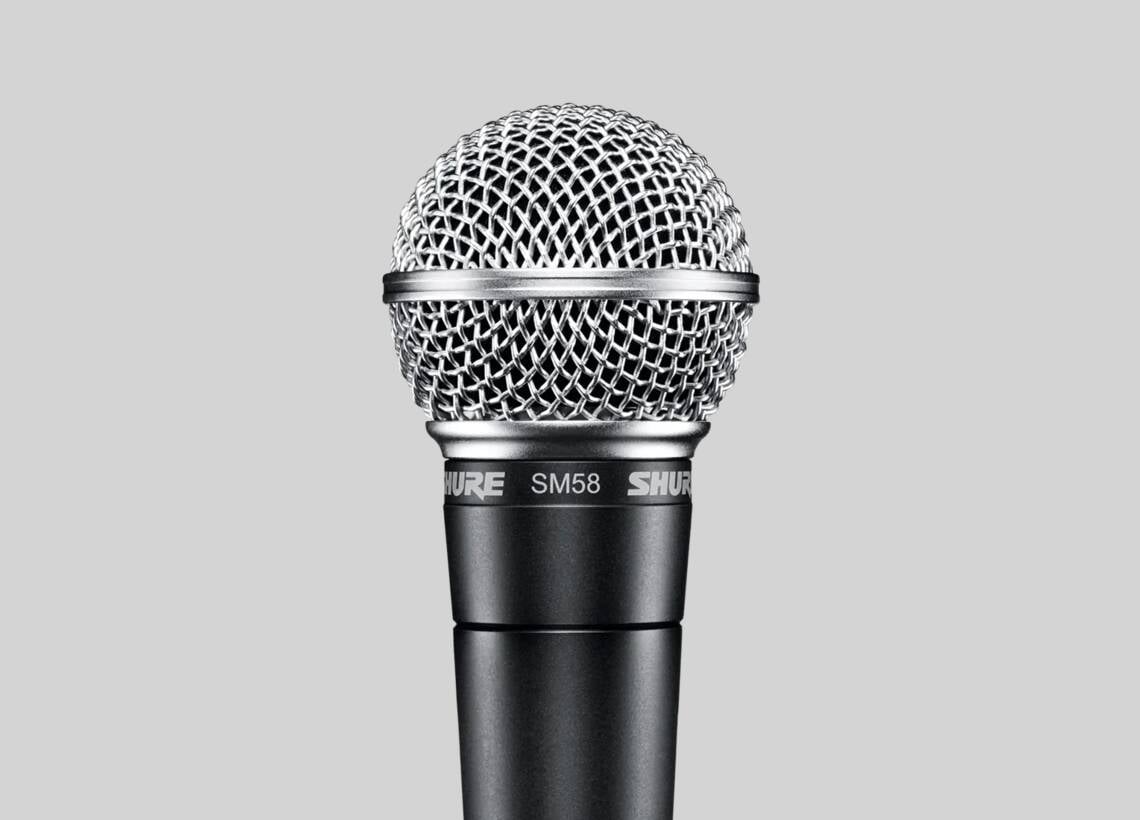
Picture "a microphone" and you're almost certainly picturing this one: the ball-grille Shure SM58. It's the mic that — by Shure's own telling — has served rock stars, presidents and the Pope, and in 2026 it hits 60 years on the market while still selling as a current model. It has hip hop history too: Shure's official editorial highlights Run-DMC rapping through it. This is, simply, the default microphone of the world.
And it streets for around $109. Which raises the obvious question: can you take the world's favorite live vocal mic and use it to record rap vocals at home? In this article, the Beat Lab editorial team checked the official Shure site (shure.com) as of July 21, 2026, and gives you an honest answer — plus how it compares to condensers, why a dynamic mic is your friend in an untreated room, and a budget recording-kit cheat sheet.
What kind of mic is the Shure SM58?
The SM58 is officially described by Shure as a professional cardioid dynamic vocal microphone "born for live performance, sound reinforcement, and studio recording." Its frequency response — 50Hz to 15kHz — is tailored for vocals, with a mid-range presence that cuts through a mix and a rolled-off low end.
The hardware is why it has lasted six decades. A spherical steel-mesh grille with a built-in pop filter tames wind and plosive "pops," and an internal pneumatic shock-mount system absorbs handling noise. Its toughness is legendary — "the mic that survives being dropped" is practically part of the spec sheet. It ships with a mic clip and a storage pouch, needs no phantom power, and runs off a single XLR cable.
Two versions exist: the standard switchless model and the SM58S with an on/off switch. For recording and streaming you'll never touch the switch, so the standard model is the usual pick.
So — can you record rap vocals with it? An honest answer
Short version: yes, as long as you understand its character. Here are the strengths and the honest trade-offs.
Strength 1: It's dynamic, so it forgives your room
The biggest enemy in home recording isn't your gear — it's your room. Put a sensitive condenser in an untreated bedroom and it faithfully captures wall reflections, the AC, PC fans and traffic, baking "cheap room sound" into every take. The low-sensitivity dynamic SM58 focuses on the voice at the grille and keeps ambience and background noise out of the recording, making usable takes possible at an ordinary desk with no vocal booth. This is exactly why the $399 SM7B rules rap vocal recording — and the SM58 gives you that same principle for about a quarter of the price.
Strength 2: It thrives on close range and loud delivery
Rap is tracked close to the mic with plenty of energy. The SM58's ball grille and built-in pop filter resist plosives, and as a dynamic mic it stays composed under loud sources. Aggressive, projected delivery is its home turf. Even handheld takes work thanks to the pneumatic shock mount — though we still recommend a stand (more on that below).
Trade-off 1: A condenser wins on air and top-end detail
With a response that tops out at 15kHz and a live-oriented mid-forward voicing, the SM58 won't give you the sparkle, air and delicate breathiness a condenser captures. For whisper-style deliveries or detailed sung vocals in a quiet space, a similarly priced condenser like the AT2020 is the better tool. Flip side: for punchy rap where you want a thick, forward core to the voice, that mid-range push is a weapon, not a weakness.
Trade-off 2: Treat the take as raw material for EQ
The SM58's sound is, for better or worse, "cuts through a live PA." When blending into a home-produced beat, plan on a low cut and a gentle top-end lift, and it turns into a very mix-friendly source. Because the take carries so little room noise, it also responds well to processing — another dynamic-mic advantage.
SM58 vs. a condenser (AT2020)
The mic most often cross-shopped at this price is the Audio-Technica AT2020, the classic budget condenser. They are near opposites in character — choose based on your room and the voice you want to capture.
| Item | Shure SM58 | Audio-Technica AT2020 |
|---|---|---|
| Type | Dynamic (low sensitivity) | Condenser (high sensitivity) |
| Room / background noise | Picks up little; strong in untreated rooms | Picks up a lot; assumes a quiet, treated space |
| Phantom power | Not required | Required (+48V) |
| Sound character | Mid-forward, thick core; punchy rap attack | Detailed up top; captures breath and air |
| Frequency response | 50Hz–15kHz | 20Hz–20kHz |
| Accessories needed | Pop filter / shock mount built in | Pop shield and shock mount recommended separately |
| Durability | Tour-grade; famously hard to kill | Handle with care (humidity, shocks) |
| Street price | around $109 | around $99 |
| Best for | Rap and projected vocals in a normal room | Sung vocals and nuance in a quiet space |
*Street prices are a guide based on research as of July 21, 2026.
A note on gain: the SM58's sensitivity is -54.5dBV/Pa — low, but not as extreme as the SM7B (-59dBV/Pa). For close-range rap vocals, the preamps on ordinary audio interfaces (50–60dB of gain) are workable; quiet talkers or distant miking will appreciate a higher-gain unit. See our audio interface guide for choosing one.
Cheat sheet: a budget SM58 rap recording kit
Assuming you already own (or are buying) an audio interface, here's what an SM58-based recording setup costs. The entire mic side of the chain stays under about $150.
| Item | Guide price | Notes |
|---|---|---|
| Shure SM58 (switchless) | around $109 | Pop filter and shock mount equivalents are built in |
| XLR cable (10–15ft) | $10–20 | Get a solidly built one (e.g. Neutrik connectors) |
| Desktop stand or boom arm | $15–40 | Handheld takes drift in distance — use a stand |
| Mic-side total | roughly $135–170 | No pop shield or shock mount to add |
| (If needed) audio interface | $130–200 | Any 2-in/2-out entry model works; no phantom power needed |
| Total from zero | roughly $270–370 | Less than half of a full SM7B rig (~$570–890) |
*Street-price guide as of July 21, 2026. Feel free to quote or share this table — a source link is appreciated.
The upgrade path: SM58 → SM7B
"Start on the SM58, move up to the SM7B when you get serious" is the classic route — both are Shure dynamics, so everything you learn about mic technique and gain staging carries over.
| Shure SM58 | Shure SM7B | |
|---|---|---|
| Position | The live standard, doubling as a home-recording entry point | The studio / broadcast / streaming standard |
| Frequency response | 50Hz–15kHz (mid-forward) | 50Hz–20kHz (flat, wide-range) |
| Gain needed | Workable on ordinary interfaces | About +60dB as a guide; may need a booster |
| Street price | around $109 | around $399 |
| Right stage | Your first mic; start recording on a budget | The "endgame" mic that lifts your recorded quality a tier |
The SM7B's wider response and built-in shock isolator deliver a clear step up in recorded quality — but it comes with its own hurdle, the famous gain problem. We cover it in full in our SM7B review (with the gain-problem solutions).
Specs and price (as of July 21, 2026)
| Item | Shure SM58 |
|---|---|
| Type | Dynamic (moving coil) |
| Polar pattern | Cardioid |
| Frequency response | 50Hz–15kHz (vocal-tailored) |
| Sensitivity | -54.5dBV/Pa (1.85mV) |
| Built-in features | Spherical steel-mesh grille with built-in pop filter, pneumatic shock-mount system |
| Included | Mic clip, storage pouch |
| Connector | XLR (no phantom power required) |
| Weight | Approx. 298g |
| Variants | Standard (switchless) / SM58S (on/off switch) |
| Street price | around $109 (as of July 21, 2026) |
*Specs confirmed on the official Shure site (shure.com) on July 21, 2026. Street prices are a guide based on major retailers the same day and will vary by region.
Who it's for / who it's not for
Recommended for
- Those starting rap or vocal recording in an ordinary untreated room
- Those who want to keep the mic side of the budget around $150 (nothing extra to buy)
- Those with a projected, energetic delivery who want a thick, punchy take
- Those who want one rugged mic that also covers live shows and open mics
Perhaps not for
- Those with a quiet space who want top-end detail and breathiness (a condenser like the AT2020 fits better)
- Those who want studio/broadcast-grade texture from day one (with a ~$399 budget, go straight to the SM7B)
- Those who work 100% in the box and never record with a mic (it won't get used)
Frequently asked questions
Q1. Does the SM58 need phantom power (+48V)?
A. No. It's a dynamic mic — plug it into your interface with an XLR cable and record. Keep +48V off in normal use.
Q2. Should I get the SM58S with the switch instead?
A. The sound is identical; the SM58S just adds an on/off switch. You'll almost never use it for recording or streaming, so the standard switchless model is the usual pick.
Q3. SM58 or a condenser for home rap vocals?
A. In an untreated room, the SM58 is the safer bet — it rejects room sound and noise. If you can provide a quiet space and want delicate detail, a condenser like the AT2020 is a solid alternative. See the comparison table above.
Q4. Is upgrading from the SM58 to the SM7B worth it?
A. Yes. Both are dynamics, but the SM7B's wider 50Hz–20kHz response and richer internal hardware lift the recorded quality a clear tier. Just note the ~$399 price and the roughly +60dB of preamp gain it needs.
Summary
Sixty years in, the Shure SM58 remains one of the very few pieces of gear you can buy without a second thought. For home rap recording, its value is simple: the dynamic-mic superpower of working in an untreated room, for around $109 — as long as you embrace its mid-forward live voicing. From there the paths are clear: step up to the SM7B when you get serious, or go AT2020 if delicate sung vocals in a quiet space are your thing. The vocals you record also make perfect raw material for your own producer voice tag. Every legend started with a first mic — this one has been that first mic for 60 years.