AT2020 vs RODE NT1 (5th Gen) vs Shure SM7B: Which to Buy? (2026 Home Recording Mic Comparison)
"Which vocal mic should I actually buy for home recording?" Search that question and three names come up every time: the audio-technica AT2020, the sub-$120 classic condenser with over two million units sold; the RODE NT1 (5th Generation), the first studio condenser with built-in 32-bit float digital output — the closest thing home recording has had to a revolution; and the Shure SM7B, the undisputed king of rap vocals and streaming. And if the budget is tight, there's the 60-year live standard Shure SM58.
Street prices span roughly $99 to $399 (as of July 2026), and condensers and dynamics have almost opposite personalities. Neither "the expensive one" nor "the famous one" is automatically right — the only correct filter is budget × room × use case.
Based on official manufacturer information and retailer listings as of July 21, 2026, the Beat Lab editorial team compares the mics on three axes — (1) sound quality and ease of recording, (2) tolerance of room reflections and noise, (3) total cost including the gear you actually need — and gives a verdict by user type.
Verdict first: the budget × room × use-case decision table
If you're short on time, here's the conclusion up front.
| Your situation | The one to buy | Why |
|---|---|---|
| Mic budget around $100 / you can record in a quiet room | AT2020 | Around $99–119 for real 20Hz–20kHz condenser detail. High output means any entry interface drives it — the default first mic |
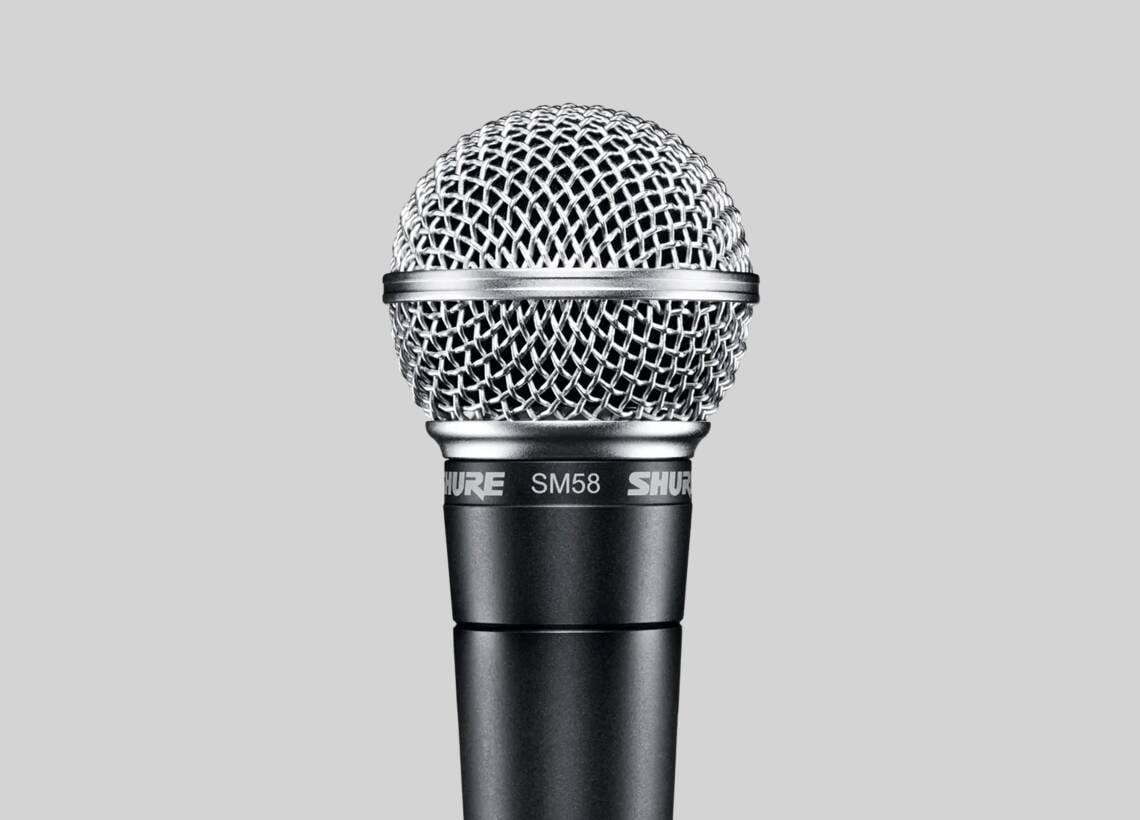
| Mic budget around $100 / room reflections and household noise are a problem | SM58 (budget pick) | Around $109, dynamic, hears far less of your room, and its built-in windscreen means nothing extra to buy |
| You want clipped takes to be impossible / starting from zero gear | NT1 5th Gen | World-first built-in 32-bit float output: over USB, takes practically cannot clip. 4dBA self-noise is in a class of its own |
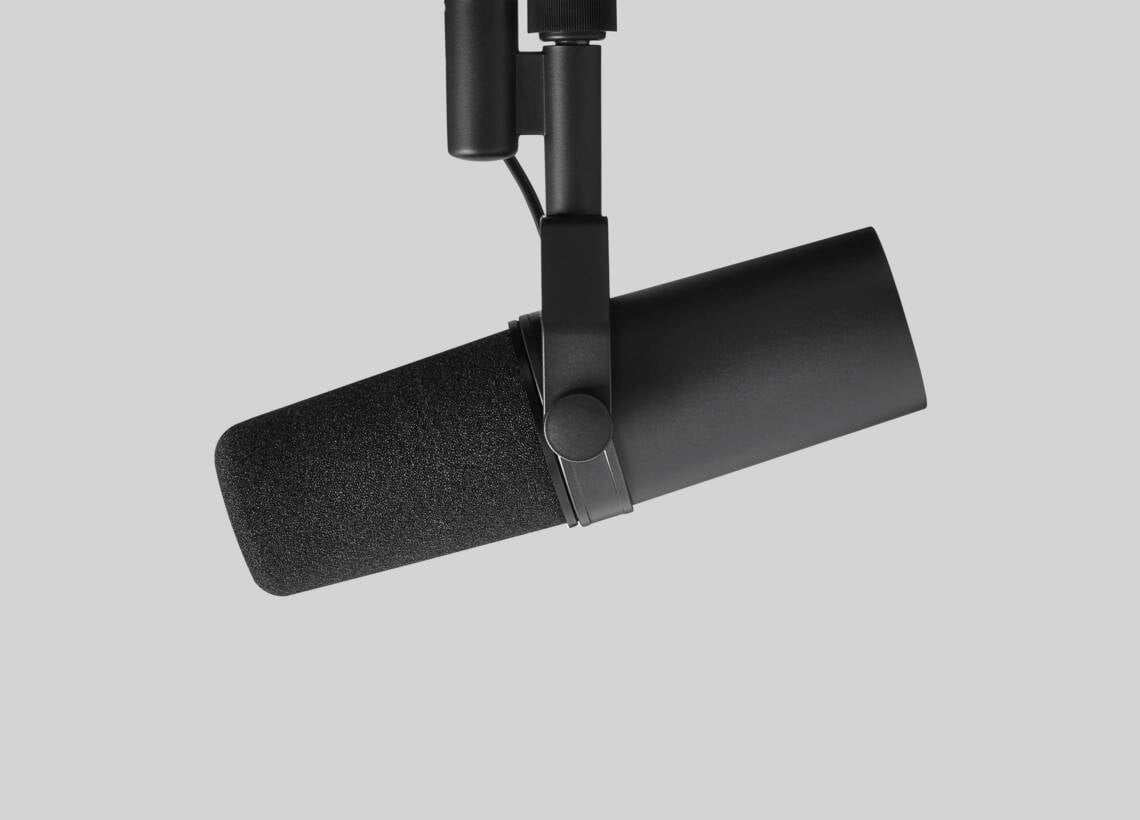
| Untreated room / you also stream or make videos | SM7B | The broadcast dynamic that ignores your room — but it needs about +60dB of clean gain and has the highest total cost |
*Prices and specs based on official information from audio-technica, RODE and Shure plus retailer listings (checked July 2026).
1. The four characters at a glance
AT2020 = the ~$99 entry condenser standard
The world's default first condenser, street around $99–119 (list $119 on the official US store). A cardioid side-address design with 20Hz–20kHz frequency response and 144dB SPL max input — numbers that punch far above the price — it captures consonant detail and breath that dynamics blur. Its high output (-37dB sensitivity) means any entry-level interface drives it plugged straight in, with no booster or external preamp to buy. It needs +48V phantom power. Full review: "AT2020 review."
NT1 5th Gen = the 32-bit float home recording revolution
The fifth generation of RODE's flagship condenser. Its "Dual Connect" output offers both XLR and USB-C: over USB you record through the built-in Revolution Preamp and up to 192kHz A/D conversion with the world's first 32-bit float digital output — if your levels are wrong or a take suddenly gets loud, you restore it afterwards instead of losing it. Self-noise is 4dBA (officially "the world's quietest studio condenser"). A shock mount with integrated pop filter plus XLR and USB-C cables come in the box. Street around $214–249 (as of July 2026). Full review: "NT1 5th Gen review."
SM7B = the room-proof king of rap vocals and streaming
A cardioid dynamic from broadcast-studio lineage. Its flat, wide 50Hz–20kHz response captures the voice smooth and warm, and its low sensitivity means it simply hears less of your untreated room and background noise. Bass roll-off and presence-boost switches shape the voice at the source. The catch: -59dBV/Pa output means it wants about +60dB of clean preamp gain (per Shure's official support guidance). Street around $399 / €400 — plus, in some setups, a booster on top. Full review: "SM7B review."
[Budget pick] SM58 = the 60-year workhorse that keeps it around $100
Before the main three, the budget-first option: the SM58 (around $109), celebrating 60 years as the world's live vocal standard. Being dynamic it shrugs off room reflections, and the built-in windscreen means no pop filter to buy. Start recording rap vocals for about a hundred dollars, then step up to the SM7B later — a classic route. Full review: "SM58 review."
2. Specs and price comparison (as of July 2026)
| Item | AT2020 | NT1 5th Gen | SM7B |
|---|---|---|---|
| Type / pattern | Condenser / cardioid | Condenser / cardioid | Dynamic / cardioid |
| Frequency response | 20Hz–20kHz | 20Hz–20kHz | 50Hz–20kHz |
| Sensitivity | -37dB (14.1mV) | — (ultra-low-noise design, XLR/USB identical) | -59dBV/Pa (wants ~+60dB gain) |
| Max SPL | 144dB SPL | 142dB SPL | — (dynamic) |
| Self-noise | 20dB SPL (A-weighted) | 4dBA | — (dynamic) |
| Connections | XLR only | XLR + USB-C (32-bit float / up to 192kHz) | XLR only |
| Power | +48V phantom | +48V on XLR / bus-powered on USB | None (only a booster needs +48V) |
| In the box | Stand mount, pouch | Shock mount with pop filter, XLR and USB-C cables | Windscreen etc. built in / included |
| Room-noise tolerance | Limited (hears reflections and noise) | Limited (same, and very sensitive) | Excellent (low sensitivity) |
| Street price | around $99–119 (July 2026) | around $214–249 (July 2026) | around $399 / €400 (July 2026) |
*Specs from the official audio-technica, RODE (rode.com) and Shure (shure.com) sites; prices from retailer listings (all checked July 2026). For the budget-pick SM58 (50Hz–15kHz, -54.5dBV/Pa, around $109), see the "SM58 review."
3. Comparison 1: sound quality and ease of recording
On raw capture range and quietness, the two condensers (AT2020, NT1 5th Gen) win. Both cover 20Hz–20kHz and record the consonant snap and breath detail that dynamics blur — material that takes Auto-Tune and reverb beautifully. The NT1 5th Gen's 4dBA self-noise (vs 20dB SPL on the AT2020) makes an audible difference on quiet verses and whisper-style vocals.
Then there's the feature that changed what "easy to record" means: the NT1 5th Gen's 32-bit float recording. Over USB, a botched gain setting or a suddenly-loud hook doesn't ruin the take — you restore the level afterwards (the cap is the capsule's own 142dB SPL limit). For one-shot takes and solo sessions, it works as insurance on performances you can't repeat. The SM7B's appeal, by contrast, isn't a number but a texture: the flat response and presence boost deliver the "broadcast-grade" thickness that keeps rappers and streamers loyal.

4. Comparison 2: room reflections and noise tolerance
The number one reason home recordists regret a mic purchase isn't specs — it's the room. An untreated bedroom is full of hard-surface reflections, air conditioning, computer fans and traffic, and a sensitive condenser faithfully records all of it.
- SM7B: a low-sensitivity dynamic that focuses on the voice at the mic and pushes the room into the background. Think of it as spending your acoustic-treatment budget on the microphone instead — ideal for rentals where you can't mount panels, and for streaming or video work in lived-in spaces.
- SM58: the same physics for about a hundred dollars. The texture is a step below the SM7B, but the room-rejection benefit comes from the design itself, so it's just as real.
- AT2020 / NT1 5th Gen: if you can engineer quiet — late-night sessions, a closet booth, a treated corner — condenser resolution pays off in full. If you can't, the spec-sheet advantages drown in room noise.
If you also stream or podcast, noise tolerance matters even more — listeners hear your room for hours — and the SM7B owns that territory. For shaping the recorded sound further, the channel strip covered in our "dbx 286s review" is a classic companion.

5. Comparison 3: total cost with the gear you actually need (linkable table)
A mic body alone records nothing. Compare the "cost to first take" — cable, stand, pop protection and audio interface included — and the ranking shifts. Figures are July 2026 street-price estimates.
| Setup | Mic body | What else you need | From-zero total (approx.) |
|---|---|---|---|
| SM58 (budget pick) | ~$109 | XLR cable + stand (no pop filter needed; interface separate) | ~$270–370 |
| AT2020 | ~$99–119 | XLR cable + pop filter + shock mount and boom arm (interface separate) | ~$310–510 |
| NT1 5th Gen (USB direct) | ~$214–249 | Boom arm/stand only (shock mount, pop filter and cables included; no interface needed) | ~$250–350 |
| NT1 5th Gen (XLR rig) | ~$214–249 | Boom arm/stand + interface with +48V ($130–200) | ~$380–550 |
| SM7B | ~$399 | Boom arm + high-gain interface (plus $80–170 booster if needed) | ~$570–890 (~$440–590 if you own an interface) |
*Street prices are July 2026 estimates. For choosing an interface, see "how to pick an audio interface." Feel free to quote or share this table (with a source link).
The standout is the NT1 5th Gen's USB-direct setup. The body looks expensive next to the AT2020, but the accessories are included and no interface is required, so the from-zero total actually comes in at or below an AT2020 rig. The SM7B sits at the top of the cost chart once its gain requirements are met — that's the price of a mic that doesn't care what your room sounds like.
6. Verdict: which type are you?
The AT2020 is for you if…
- You want a proper first vocal mic in the $100–150 range
- You can engineer a quiet recording space (late nights, closet booth)
- You'd rather put the savings into your interface or plugins
The NT1 5th Gen is for you if…
- You want 32-bit float to make clipped takes impossible — one-shot takes, solo sessions
- You're starting from zero over USB but want to grow into an XLR + interface rig
- You chase whisper-quiet verses and want the lowest noise floor available
The SM7B is for you if…
- You record rap vocals in an untreated room you can't fix
- You want one mic for recording, streaming, video and podcasting
- You can invest in +60dB of clean gain (high-gain interface or booster)
The SM58 is for you if… (budget pick)
- You want the mic side of your rig done for about $109 and to start recording now
- You want dynamic-mic room rejection at the minimum possible spend
All four are proven worldwide standards — there is no wrong answer, only a wrong match. The split: around $100 it's AT2020 or SM58; for take insurance and the quietest signal it's the NT1 5th Gen; for untreated rooms and streaming double-duty it's the SM7B. Still unsure? Record 30 seconds on your phone in your room and listen to how much environment you hear — then decide.
FAQ
Q1. Which one should I pick as my first vocal mic?
Under about $150: the AT2020 (~$99–119) if you can record in a quiet room, or the SM58 (~$109) if your room is the problem. If you can stretch to $220–250, the NT1 5th Gen adds 32-bit float take insurance and the lowest noise floor (all prices as of July 2026).
Q2. Can the NT1 5th Gen record over USB alone?
Yes — USB-C straight into a computer, through the built-in Revolution Preamp with up to 192kHz A/D in 32-bit float (bus-powered; Windows uses a dedicated ASIO driver). There's no headphone jack on the mic, so monitor via your computer or an interface. XLR is also available and needs +48V phantom power.
Q3. Will the SM7B work with an ordinary interface?
The benchmark is about +60dB of clean gain (Shure's official guidance). A recent high-gain interface such as the Scarlett 4th Gen (69dB, manufacturer figure) works plugged straight in; with 50dB-range preamps, add an inline booster (~+25dB). See the setup cheat sheet in the "SM7B review."
Q4. Condenser or dynamic for an untreated, noisy room?
Dynamic (SM58, SM7B): low sensitivity means far less room and background noise on the take. Condensers (AT2020, NT1 5th Gen) capture more detail but also more of your room and computer fans — the deciding factor is whether you can create quiet.
Summary
The 2026 home recording mic market splits cleanly: the AT2020 for entry, the SM58 as the budget room-friendly pick, the NT1 5th Gen as the 32-bit float revolution, and the SM7B as the mic that ignores your room. Anywhere you land between roughly $99 and $399 (as of July 2026) buys a proven standard, so go back to the decision table and the total-cost table and choose honestly — by budget and by room. Once your takes are mixed and bounced, run them through the dynamics checker (loudness / LUFS) to sanity-check your levels with objective numbers.