Yamaha HS5 Review (2026): The White-Cone Studio Monitor Standard
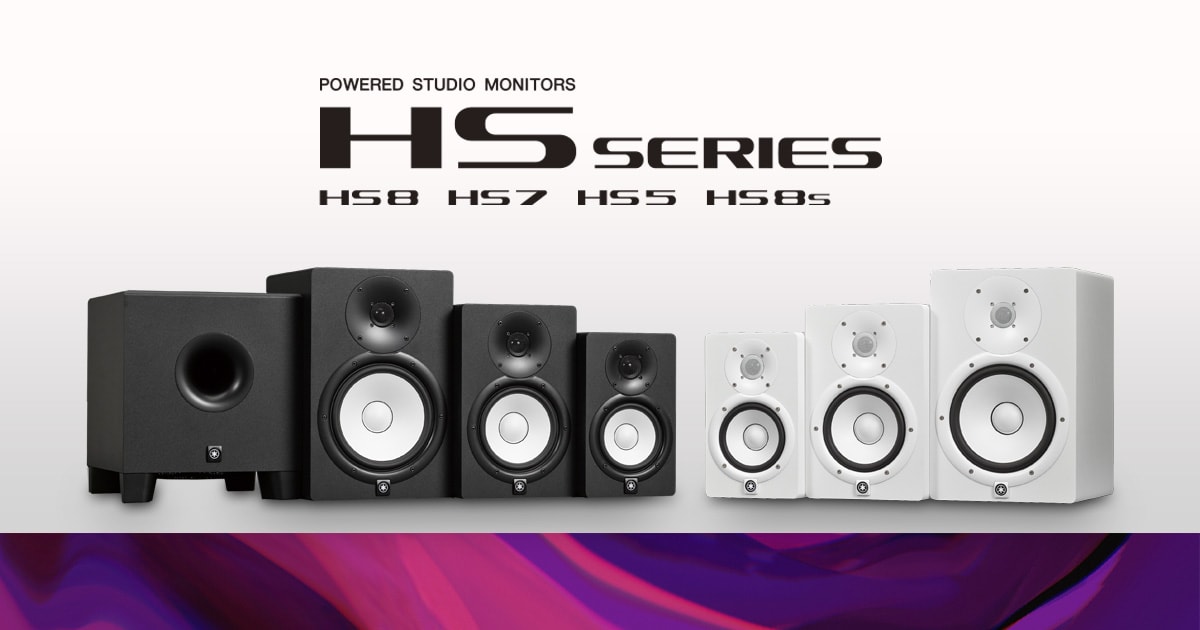
Image: Yamaha Corporation (official product page og:image)
Watch any studio tour or beat-making video and you'll spot it: that speaker with the white cone. That's Yamaha's HS series.
The 5-inch Yamaha HS5 is the model most producers start with — the default "first real studio monitor" worldwide. At roughly €160 / $200 per speaker, around €320 / $400 per pair (checked July 2026), it's a realistic entry ticket to proper monitoring.
In this guide, the Beat Lab editorial team covers why it's time to graduate from headphone-only mixing, who the HS5 is enough for (and who should step up to the HS7), and how to place it in a small room.
What is the Yamaha HS5? Why the white cone became studio furniture
Yamaha's white woofer cone goes back to the legendary NS-10M — the passive monitor that sat on the meter bridge of studios worldwide from the late 1970s onward. The current HS series carries that philosophy into powered (amp built-in) studio monitors for the home studio era: reproduce the source honestly, with no flattery.
The key idea: this is not a speaker that makes music sound good — it's a speaker that refuses to hide flaws. Precisely because you can hear the rough edges, a mix balanced on the HS5 tends to hold up on phone speakers, earbuds, and car stereos alike.
HS5 specs at a glance
| Type | Bi-amplified 2-way bass-reflex powered studio monitor |
|---|---|
| Drivers | LF: 5" (white) cone woofer / HF: 1" dome tweeter |
| Frequency response | 54Hz–30kHz (-10dB) / 74Hz–24kHz (-3dB) |
| Rated output | 70W total (LF: 45W + HF: 25W), bi-amped |
| Inputs | XLR (balanced) x1, TRS phone (balanced) x1 |
| Room EQ | ROOM CONTROL (0/-2/-4dB below 500Hz) / HIGH TRIM (±2dB HF) |
| Size & weight | 170 x 285 x 222mm / 5.3kg (each) |
| Colors | Black (HS5) / White (HS5W) |
| Street price (reference) | around €160 / $200 per speaker, €320 / $400 per pair |
Specs from Yamaha's official site; prices checked July 20, 2026 at Thomann and other authorized dealers. Prices vary with sales and region.
One thing to watch: the HS5 is normally sold as a single unit. You need two for stereo (Thomann also offers pair and stand bundles), and each speaker takes its own power cable.
Three reasons to graduate from headphone-only mixing
"But my mix sounds fine on headphones" — everyone starts there. Speakers give you information headphones physically cannot.
🔊 Only speakers tell you how much low end you really have
Headphone drivers sit right next to your ears, which flatters kick and bass balance. Play the same mix into a room through air, and too-much or too-little low end becomes obvious immediately. If you struggle with 808s and bass levels, monitors are the single biggest upgrade.
🎯 Panning and reverb "distance" read correctly
Headphones deliver hard-separated left and right signals; speakers let the two sides blend in the air before reaching your ears. That's much closer to how listeners actually hear music — in cars, on TVs, on smart speakers — so your panning and reverb decisions become realistic.
🧏 Your ears last longer
Compared to drivers firing straight into your ears for hours, speakers at moderate volume cause far less listening fatigue — and your judgment stays sharp. The classic workflow: speakers for everyday work, monitor headphones for detail checks and sub-bass.
Who the HS5 is enough for — and who needs the HS7
The differences between HS siblings come down to woofer size, i.e. bass extension and output.
| HS5 | HS7 | HS8 | |
|---|---|---|---|
| Woofer | 5" | 6.5" | 8" |
| Response (-10dB) | 54Hz–30kHz | 43Hz–30kHz | 38Hz–30kHz |
| Output | 70W | 95W | 120W |
| Weight (each) | 5.3kg | 8.2kg | 10.2kg |
| Best environment | Desktop, small room | Medium room, on stands | Large / treated room |
From Yamaha's official specifications (checked July 2026)
- The HS5 is enough if: you work in a small bedroom studio with the speakers on your desk, you can't play loud at night, or this is your first monitor. Its restrained low end is a feature in small rooms — less bass buildup means more accuracy.
- You need the HS7 if: your room is medium-sized or larger, you can keep 50cm or more from the walls, you can use stands, and you produce bass-heavy genres you want to judge on speakers alone.
- If in doubt: start with the HS5 plus headphones, and add the HS8S subwoofer later if you need it. That's the low-risk path.
Cheat sheet: which monitor for which room size
We condensed "which monitor should I buy for my room?" into one chart. Bookmark it and come back whenever you're choosing monitors.
| Room / setup | Recommended | Distance from wall | ROOM CONTROL setting |
|---|---|---|---|
| Small room (~10m²), on the desk, wall close behind | HS5 | Only 10–20cm possible | -4dB |
| Small room, desk placement with some clearance | HS5 | 20–40cm | -2dB |
| Small-to-medium room, on stands | HS5 (add HS8S for more low end) | ~40cm | 0 to -2dB |
| Medium room (~15–20m²), on stands | HS7 | 50cm+ | 0 to -2dB |
| Large / acoustically treated room | HS8 | 50cm+ | 0 |
Chart by the Beat Lab editorial team. ROOM CONTROL is the rear switch that attenuates output below 500Hz — the closer the wall, the more you should engage it. If you share or quote this chart, please link back to this page.
Five placement tips that unlock the HS5
With monitors, how you place them matters as much as what you buy. The HS5's compact size gives you flexibility — just nail these five points.
- Tweeters at ear height: when seated, the 1" tweeter should sit at roughly the same height as your ears. Use stands or isolation pads to adjust.
- Make an equilateral triangle: your head and the two speakers should form an equilateral triangle, with the speakers angled slightly inward.
- Keep off the wall + use ROOM CONTROL: the HS5 has a rear bass-reflex port, so pushing it against the wall inflates the low end. Leave as much space as you can; if you can't, engage the rear ROOM CONTROL switch (-2/-4dB).
- Don't sit them directly on the desk: desktop resonance smears the low end. Isolation pads alone noticeably clean things up.
- Moderate volume is fine: nearfield monitors aren't meant to be cranked. Conversation-level volume actually gives you more accurate balance decisions.
Once your setup is dialed in, lock in your reference workflow with a mix template, and check your bounces with our free loudness / LUFS checker.
Honest downsides — and how to work around them
⚠️ You can't see sub-bass below ~54Hz
The response reaches 54Hz (-10dB), so the fundamental of an 808 in the 40–50Hz range isn't accurately audible on the HS5 alone. The fix is simple: check the sub range on monitor headphones or a spectrum analyzer, and add the HS8S subwoofer later if you want speakers to cover it.
⚠️ It's not a "feel-good" speaker
Uncolored monitor sound can feel plain next to consumer hi-fi speakers. That's not a flaw — it's the spec. This is a tool for making decisions, not for enjoying playlists.
⚠️ You'll effectively need an audio interface
Inputs are balanced XLR and TRS — the HS5 isn't designed to hang off a laptop headphone jack. If you don't own one yet, plan for an audio interface as part of the budget.
FAQ
Q1. Is the HS5 too big for a small bedroom studio?
A. No. With a 5-inch woofer and a cabinet of just 170mm wide and 285mm tall, the HS5 is designed for desktop nearfield use. In a small room, its restrained low end is actually an advantage — the room saturates with bass far less easily.
Q2. Should I buy the HS5 or the HS7?
A. Decide by room size and how far the speakers can sit from the wall. For a small room and desktop placement, choose the HS5. If your room is medium-sized or larger and you can keep real distance from the walls, the HS7 is worth it — its bass extends down to 43Hz (-10dB), which can get boomy in small rooms.
Q3. Do I need a subwoofer?
A. Not at first. Start with the HS5 plus monitor headphones to check the sub-bass range. If you later want to push low end for EDM or hip-hop on speakers alone, you can add the matching HS8S subwoofer.
Q4. Do I need a separate amplifier?
A. No. The HS5 is a powered (active) monitor with built-in bi-amping. All you need is an audio interface and cables (XLR or balanced TRS). Note that each speaker needs its own power cable, and the HS5 is normally sold as a single unit — buy two for stereo.
Verdict: your first monitor should be a reference, not a treat
The Yamaha HS5 doesn't sell itself on excitement. Its real value is the fact that producers all over the world are making decisions against the same sound — and for around €320 / $400 a pair, you can join them.
If you've been feeling the ceiling of headphone-only mixing, this is the graduation moment.