Roland SP-404MKII Review (2026): The Sampler That Made the Lo-fi Sound
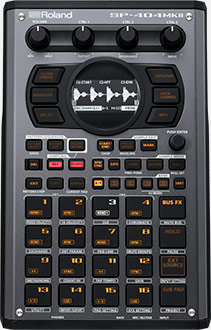
Image: Roland Corporation (official product page)
That crackling vinyl noise and gentle tape wobble in every lo-fi hip hop stream? A surprising amount of "that sound" traces back to one line of samplers: the Roland SP-404 series. The beat scene even celebrates April 4 as "404 Day" — it's rare for a piece of hardware to become culture in itself.
The current model, the SP-404MKII, launched in 2021 and is still the compact-sampler standard in 2026, backed by major firmware updates running through v5.5x. US street prices sit around $449–$499 (checked July 2026) — if anything, cheaper than its newer rivals.
Based on Roland's official specifications (checked July 2026), this review covers (1) why it became the lo-fi standard, (2) an effects cheat sheet, (3) who it suits and who it doesn't, and (4) how it compares to its rivals.
Verdict first: who the SP-404MKII is for
- You want to sculpt lo-fi, boom bap and beat-tape textures entirely on hardware: its lineup of texture effects — Vinyl Simulator, Cassette Simulator, Lo-fi — is in a class of its own at this price.
- You want your sampler on stage and in DJ sets too: DJ mode, DJFX Looper and native Serato integration are built in.
- You want one unit to grow with: nearly five years of firmware updates, a dedicated editor app, Koala Sampler integration, and a massive community.
Who it doesn't suit: people who want the fastest possible first sampler, and people who need a built-in speaker for fully self-contained sessions outdoors. The SP assumes shortcut memorization and has no speaker. If that's you, start with our "SP-404MKII vs MPC Sample vs EP-133 comparison."
Specifications (Roland official, checked July 2026)
| Pads | 16 velocity-sensitive pads + 1 sub pad (multi-color) |
|---|---|
| Polyphony | 32 voices |
| Storage | 16GB internal (incl. preload data) + SD card (SDHC/SDXC, for backup and sample import/export) |
| Data capacity | 2,560 samples and 2,560 patterns (16 × 10 banks × 16 projects) |
| Sampling | 48kHz / 16-bit, up to 16 minutes per sample. Imports WAV/AIFF/MP3 (plus FLAC/M4A via the app) |
| Skip Back Sampling | Captures up to the last 40 seconds retroactively |
| Effects | 41 multi-effects + 17 input effects |
| Sequencer | Patterns 1–64 bars, realtime loop recording + TR-REC step input, motion recording |
| Display | Graphic OLED with zoomable waveform editing |
| I/O | Line in/out, mic/guitar in, dual headphone outs (1/4" + mini), MIDI in/out (stereo mini), USB-C (audio/MIDI) |
| Power | AC adaptor / USB-C bus power (1.5A+) / 6x AA batteries (approx. 2.5h alkaline, 3.5h NiMH) |
| Size / weight | 178 × 276 × 71 mm, 1.1 kg |
| Street price (guide) | $449–$499 US street; from approx. 49,500 yen incl. tax in Japan (checked July 2026) |
*Specs from the official Roland site; prices from authorized retailer listings (both checked July 20, 2026). Prices move, so check the store page for the latest.
▶ Official SP-404MKII introduction (RolandChannel)
Why the SP-404 became the lo-fi scene's standard
The SP lineage runs back to the SP-303 and SP-404 of the 2000s. Their slightly rough sound, hands-on immediacy and portability made them beloved among sample-based beatmakers — J Dilla's use of the SP-303 is the stuff of legend — and over time, "the SP sound" became part of beat music's shared vocabulary. Roland itself runs an official "404 Day" feature telling the story of SP samplers and lo-fi hip hop.
Crucially, this isn't nostalgia hardware. The SP-404MKII was redesigned as a modern machine — OLED waveform editing, low-latency pads, 16GB of storage — which means you get the lo-fi texture with a current-generation workflow. That combination is why it's still the default choice. For the craft side of the genre, see "how to make boom bap."
The SP-404MKII effects cheat sheet
The SP-404MKII's biggest draw is that 41 multi-effects and 17 input effects sit directly under your fingers, triggered from pads and knobs. Here are the ones that define "the SP sound," with what they do and where they're typically used.
| Effect | What it does to the sound | Classic use |
|---|---|---|
| Vinyl Simulator | Adds record crackle, wow/flutter and narrowed bandwidth | A light coat over the whole beat — the lo-fi / boom bap signature move |
| Cassette Simulator | Adds tape hiss, saturation and soft top-end (new on the MKII) | Ages a melody loop a generation; stacking with Vinyl is popular |
| Lo-fi | Bit-depth / sample-rate reduction grit (new on the MKII) | Drum texture; commit it via resampling |
| Resonator | Adds resonant overtones for metallic, dreamlike color (new on the MKII) | Accents on melodic layers and ambient passages |
| DJFX Looper | Spins short loops with turntable-style speed/reverse gestures | The live "moment" — beat-juggling-style showmanship |
| Sidechain compression | Pumping effect that ducks with the kick (added in v5.5x) | Lo-fi and house-style movement; mix clean-up |
| Vocoder / Auto Pitch (input FX) | Turns the mic input into robot / hard-tuned vocals | Rough hook ideas, talkbox-flavored ear candy |
| Bus FX | Custom effect routing and stacking | Layer Vinyl + Cassette and build "your" texture |
*Effect availability per Roland's official product page (checked July 2026). If you share or cite this table, please link back to this page.
The SP way isn't just leaving effects on — it's resampling the processed audio so the texture is baked into the sound, then processing again. Sounds "grow" each time they pass through the machine. That feeling is nothing like automating a DAW plugin, and in our view it's the single biggest reason people never sell their SPs.
The workflow: from sampling to finished beat
Capture: Skip Back Sampling rescues the take you didn't record
You can sample from line in, the mic/guitar input, or a phone/computer over USB-C, all at 48kHz. The standout is Skip Back Sampling: in any mode, the SP can retroactively capture up to the last 40 seconds of audio. The most painful moment in beatmaking — "that was perfect and I wasn't recording" — simply stops existing.
Chop: OLED waveform editing keeps your cuts on target
Zoom into the waveform on the OLED and chop by tapping in real time or letting Auto Mark detect transients. Envelope, pitch shift and automatic BPM detection are all onboard. If chopping itself is new to you, our "sample chopping guide" covers the fundamentals — good pre-purchase homework.
Build: TR-REC and pattern chains turn loops into songs
The sequencer offers realtime loop recording plus Roland's classic TR-REC step input, with quantize and shuffle for swing. Chain patterns into full arrangements, and record knob movements with motion recording so the performance itself becomes part of the track. When you're done, multi-pad export writes every sample in a pattern as individual WAV files for your DAW.
▶ V5.50 firmware update overview (RolandChannel) — the sidechain compression addition in action.
It keeps evolving after you buy it
A defining trait of the SP-404MKII is that it has kept gaining features since launch: motion recording in v3.0, workflow expansions in v4.x, native Serato DJ Lite/Pro and Serato Studio support in v5.0, sidechain compression in v5.5 — with Ver.5.52 current as of July 2026 (Roland official, checked July 2026).
- Serato integration: works as a pre-mapped controller, blurring the line between DJ sets and beatmaking.
- Koala Sampler integration: two-way sampling with the popular mobile app — grab sounds on your phone, fly them into the SP and back.
- SP-404MKII app (Mac/Windows): waveform editing, sample management and legacy SP project import; on Mac it also runs as an AU/VST3 plugin inside your DAW.
- Customization: the aluminum faceplate is removable, with official templates for DIY overlays, plus custom startup logos and screensavers. Making the SP "yours" is part of the culture.
The honest downsides: three things to know before buying
- The learning curve is real: operation leans on button-combination shortcuts, and you'll live with the official shortcut sheet for the first few weeks. Once memorized, you fly.
- No built-in speaker: the unit is silent on its own — headphones or a speaker are mandatory. For "beats in the park through a built-in speaker," the MPC Sample or EP-133 win.
- About 2.5 hours on batteries: six AA alkalines yield roughly 2.5 hours (official figure). For longer outdoor sessions, plan on a USB-C power bank (1.5A+).
SP-404MKII vs MPC Sample vs EP-133 K.O. II at a glance
In 2026, the SP-404MKII is inevitably cross-shopped against the AKAI MPC Sample and Teenage Engineering EP-133 K.O. II. The essentials:
| Item | SP-404MKII | MPC Sample | EP-133 K.O. II |
|---|---|---|---|
| US price guide | $449–$499 street | $399 (March 2026 launch) | Around $329 |
| Strength | Texture effects and live performance | Self-contained: battery, speaker and mic built in | Intuitive UI and 16mm-thin portability |
| Weakness | Learning curve; no speaker | No touchscreen or expansion instruments | Deliberately limited 128MB sample memory |
| Best for | Lo-fi sound design and live sets | MPC-style chopping anywhere | Casual first-sampler buyers |
*Prices from official announcements and retailer listings (checked July 2026).
For the full four-axis comparison and type-by-type verdicts, see "SP-404MKII vs MPC Sample vs EP-133 K.O. II: Which to Buy?"
Frequently asked questions
Q1. Is the SP-404MKII beginner-friendly?
Yes, but with a caveat: its depth assumes you will memorize shortcut combinations, giving it the steepest learning curve among compact samplers. In exchange, the community and tutorial ecosystem is enormous. If you want the fastest possible start, the EP-133 K.O. II is also worth considering.
Q2. Can I finish beats without a computer?
Yes. Sampling, waveform editing (chop, envelope, pitch), pattern sequencing and effect-resampling all happen on the unit itself. It runs on an AC adaptor, USB-C bus power, or six AA batteries (about 2.5 hours on alkaline), per Roland's official specs (checked July 2026).
Q3. Should I buy the SP-404MKII, MPC Sample or EP-133 K.O. II?
Choose the SP-404MKII for lo-fi texture and live performance, the MPC Sample for self-contained portability, and the EP-133 K.O. II for the most casual start. See our three-way comparison for details.
Q4. How much does the SP-404MKII cost?
US street prices are around $449 to $499 (checked July 2026); in Japan it lists from about 49,500 yen including tax. With firmware updates continuing through v5.5x nearly five years after launch, the price-to-maturity balance is strong.
Summary: a whole culture for under $500
The SP-404MKII is not just a feature-rich sampler. The textures of Vinyl Simulator and Cassette Simulator are the sound of a genre; add the 404 Day community, Roland's ongoing update commitment, and the DIY faceplate culture, and what you're really buying is an entry ticket to lo-fi and beat culture itself.
At $449–$499 street (checked July 2026), that's a bargain. When it arrives, turn on Skip Back Sampling first and chop something you love. For checking sample BPM and key, our free BPM/key detection tool has you covered.