Maschine vs MPC: Which to Buy? Standalone & Price Compared (2026)
When choosing hardware for making beats on pads, the two that always come up for comparison are Native Instruments' Maschine and AKAI Professional's MPC. Both center on a 16-pad workflow, but their design philosophies are opposites, so the answer isn't "which is better" but "which fits your production setup."
What's more, from 2025 into 2026 the MPC lineup went through a big generational change. In October 2025 the flagship portable MPC Live III was released, and in June 2026 the new-generation MPC One G2 and MPC Key 37 G2 arrived. The premises of older comparison articles online have changed.
In this article, based on each company's official info and Japanese retailer info as of July 7, 2026, we compare the two on four axes — (1) standalone use, (2) software integration, (3) bundled software/sounds, (4) price — and reach conclusions by user type.
▶ Maschine MK3 official masterclass (Native Instruments). It walks through the Maschine-side workflow.
1. First, the premise: the design difference between Maschine and MPC
Maschine = a system used "as one with a PC"
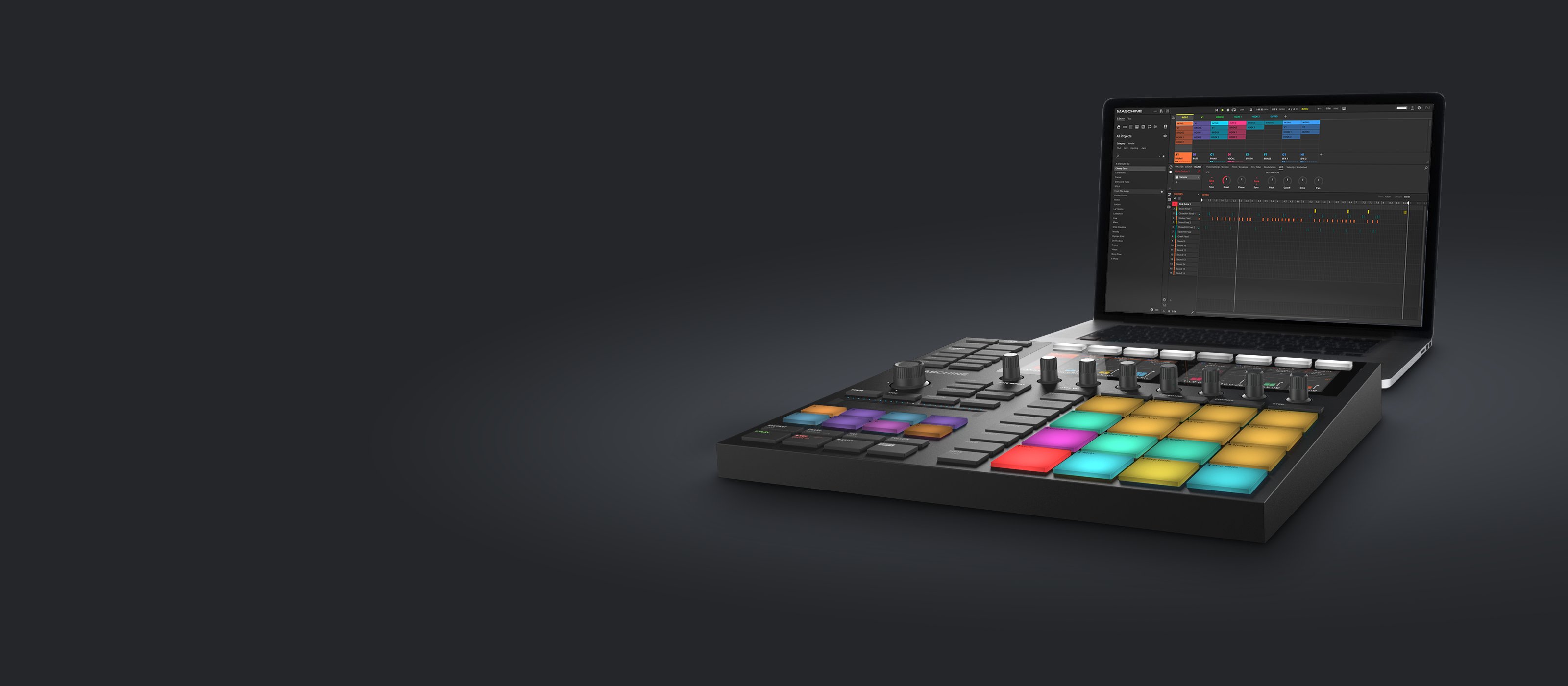
Maschine is a system combining the Maschine software running on a PC/Mac (currently Maschine 3) with dedicated hardware. The current line is three models: the Maschine MK3, the compact Maschine Mikro MK3, and the only one that runs standalone, the Maschine+ (as of July 2026; the older MK1/MK2 lines have had software support end announced). The core MK3 assumes a PC connection, but in exchange, its biggest strength is controlling VST plugins and sound libraries on your PC directly from the hardware's knobs and pads. For a detailed review, see "Maschine MK3 Review."
MPC = a workstation that "completes work independently of a PC"
The current MPC mainstays, on the other hand, are all standalone machines. With a CPU, storage and touch display built in, they handle everything from sampling to sequencing, mixing and full-song arrangement without a PC. The current generation runs MPC3 OS and, with touch operation and a track-based linear arrangement screen, is effectively "a DAW inside the hardware."
2. Current lineup and pricing (as of July 2026)
| Model | Type | Highlights | Japan price (at time of check) |
|---|---|---|---|
| NI Maschine MK3 | PC/Mac-connected | 16 large pads, two full-color displays, built-in 24-bit/96kHz audio interface. Maschine 3 software + Komplete Select included | From roughly 70,000 yen (71,500 yen incl. tax, as of July 4, 2026) |
| NI Maschine+ | Standalone | Higher-end model that runs the Maschine workflow standalone | See product page for street price |
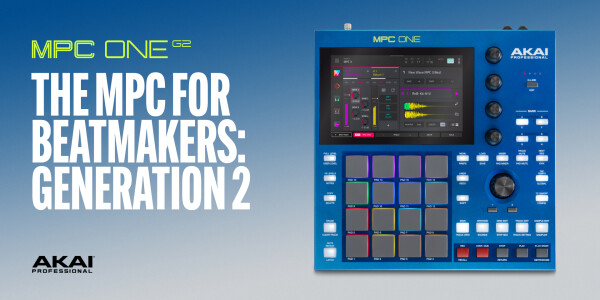
| AKAI MPC One G2 | Standalone | New-generation desktop machine released June 29, 2026. MPC3 OS + 2nd-gen 8-core CPU (4x the previous processing power), audio/MIDI expansion over a single USB-C | 139,800 yen incl. tax (retail as of June 19, 2026) |
| AKAI MPC Key 37 G2 | Standalone (keyboard-integrated) | 37-key synth-action keyboard + MPC pads. 16 audio tracks, 32 plugin instances, 7-inch multitouch screen | 174,800 yen incl. tax (retail as of June 19, 2026) |
| AKAI MPC Live III | Standalone (battery built-in) | Flagship portable released October 3, 2025. 8-core CPU + 8GB RAM + 128GB storage, 3D-sensing MPCe pads, built-in mic and stereo speakers | Estimated street price 268,000 yen incl. tax (at launch, per inMusic Japan) |
*Maschine specs and current status are based on Native Instruments official info (confirmed July 2026); MPC release dates and prices are based on inMusic Japan press releases and listings at the Japanese retailer Rock oN. Prices vary, so check the product page for the latest. Separately, AKAI also announced a sampling-focused compact unit, "MPC Sample," in 2026.
3. Comparison 1: standalone or not — the biggest fork
To put the conclusion first, this is the single most important point separating the two.
- The Maschine MK3 requires a PC. It does not run standalone (if you need standalone in the NI camp, that's the Maschine+).
- All current MPCs are standalone. With just power (battery for the Live III), you can finish a beat on the couch or in the park.
If you want to "face a beat machine as an instrument without looking at a PC screen" or "separate your production location from a PC," it's MPC-only at this point. The MPC Live III in particular builds in a battery, speakers and mic, so it can be carried around from sampling to finished song with just the unit itself.
Conversely, if you're going to finish the mix in a DAW anyway, standalone is a "feature you can live without." It's easy to understand a PC-connected type like the MK3 as putting that budget into price and integration performance instead.
4. Comparison 2: software integration and plugin assets
Maschine: control your VSTs from hardware
Maschine's real forte is launching third-party VST plugins on your PC inside the Maschine software and controlling them with parameters auto-mapped to the hardware knobs. Because you can fold your existing synth assets like Serum and Omnisphere into the pad workflow, it's a design where the more you already own a DAW and plugins, the bigger the benefit. Loading Maschine as a plugin inside your DAW for hybrid use is also common.
MPC: standalone-first, with strengthened PC integration
The MPC has a set of built-in plugins and effects that are self-contained within standalone, and you add expansion sounds from the official MPC store. MPC software for PC (MPC3) is also provided, so you can use the hardware as a controller. Furthermore, the current G2 generation and Live III handle multichannel audio and MIDI over a single USB-C, and the maker states that integration into a hybrid studio is now smoother than before. Do keep in mind, though, that you cannot run arbitrary VSTs from your PC directly on the standalone unit.
5. Comparison 3: bundled software and sounds
- Maschine MK3: In addition to the Maschine 3 software, it includes the Komplete Select bundle (with Massive, Monark, Prism and more) and the Maschine library with 700+ drum samples and 140+ Kontakt multisample instruments (official info as of July 2026). Having a full set of pro-quality sounds from day one is a big plus for people just starting out.
- MPC: The unit carries built-in sounds, effects and sample content, self-contained standalone. On top of that, MPC3 OS keeps adding features via updates, and the Live III can use desktop-class features such as stem separation (Pro Stems Separation).
6. Comparison 4: price — Maschine's initial outlay is about half
At Japanese street prices, the Maschine MK3 is around 70,000 yen, while the current MPC entry model One G2 is 139,800 yen and the Live III is 268,000 yen (all at the times of check above). The initial outlay differs by roughly 2x to 4x.
This is the very structural difference between "Maschine, which borrows the PC's processing power" and "MPC, which builds in a PC-equivalent brain." If you already own a production PC, the Maschine MK3's value is outstanding. On the other hand, if you don't have a PC or are due for a replacement, the totals of "PC + MK3" versus "MPC alone" actually converge, so the MPC's apparent premium fades.
7. Conclusion: recommendations by type
Who the Maschine MK3 suits
- Your main battleground is a PC/Mac (DAW), and you want to leverage your existing VST plugin assets
- You want to keep the initial outlay in the 70,000-yen range while getting a sound bundle all at once
- You want a hybrid workflow: ideas on hardware, finishing in the DAW
Who the MPC (One G2 / Key 37 G2 / Live III) suits
- You want to go from sampling to finished on hardware alone, away from a PC
- You don't want to fix your production location — couch, studio, outdoors (especially the Live III)
- You want to build from chords and melodies on a keyboard (Key 37 G2)
- You're drawn to the traditional, direct-lineage MPC workflow itself
If you're torn, the shortcut is to ask yourself "is the center of my production inside the PC, or outside it?" Inside the PC, Maschine; outside, MPC. Choose on this axis and you're unlikely to regret either. If you want to organize an orthodox beatmaking flow, see how to make boom bap too.
Frequently asked questions
Q1. Can the Maschine MK3 be used without a PC?
No. The Maschine MK3 is a controller-plus-software system that you connect to a PC/Mac (it does have a built-in audio interface with line I/O). If you want to work without a PC, your options are Native Instruments' standalone Maschine+ or AKAI's MPC series.
Q2. Can the MPC also be used connected to a PC?
Yes. The current MPC3 OS generation (MPC One G2, MPC Key 37 G2, MPC Live III, etc.) handles audio and MIDI over a single USB-C cable, and the maker states it supports both standalone production and a PC-based hybrid studio setup (as of July 2026).
Q3. For beginners, which is better, Maschine or MPC?
If you have a PC and want to keep costs down, the Maschine MK3 is a strong pick. At a street price of roughly 70,000 yen, it comes with the Maschine 3 software and sounds such as Komplete Select. If you want to work with hardware alone without sitting at a PC, the current MPC entry model MPC One G2 (139,800 yen incl. tax; retail as of June 2026) is a good starting point.
Q4. How do the current MPC models differ?
The MPC One G2 is a compact desktop entry-to-core machine, the MPC Key 37 G2 is a keyboard-integrated unit with a 37-key synth-action keyboard, and the MPC Live III is the flagship portable model with a built-in battery, speakers and mic. All run MPC3 OS (as of July 2026).
Summary
The Maschine vs. MPC comparison boils down to a choice between "PC-integration specialist" and "standalone all-in-one." As of 2026, the MPC has finished its generational change across One G2, Key 37 G2 and Live III, further raising standalone polish, while the Maschine MK3 remains the most cost-effective entry point for PC users — a software-and-sounds setup for around 70,000 yen. Choose honestly based on your production style. Whichever you pick, all that's left is to make beats and publish them. For checking BPM and key, use our free BPM/key detection tool.