Ableton Push 3 Review (2026): Standalone vs Controller — and How It Compares to MPC & Maschine
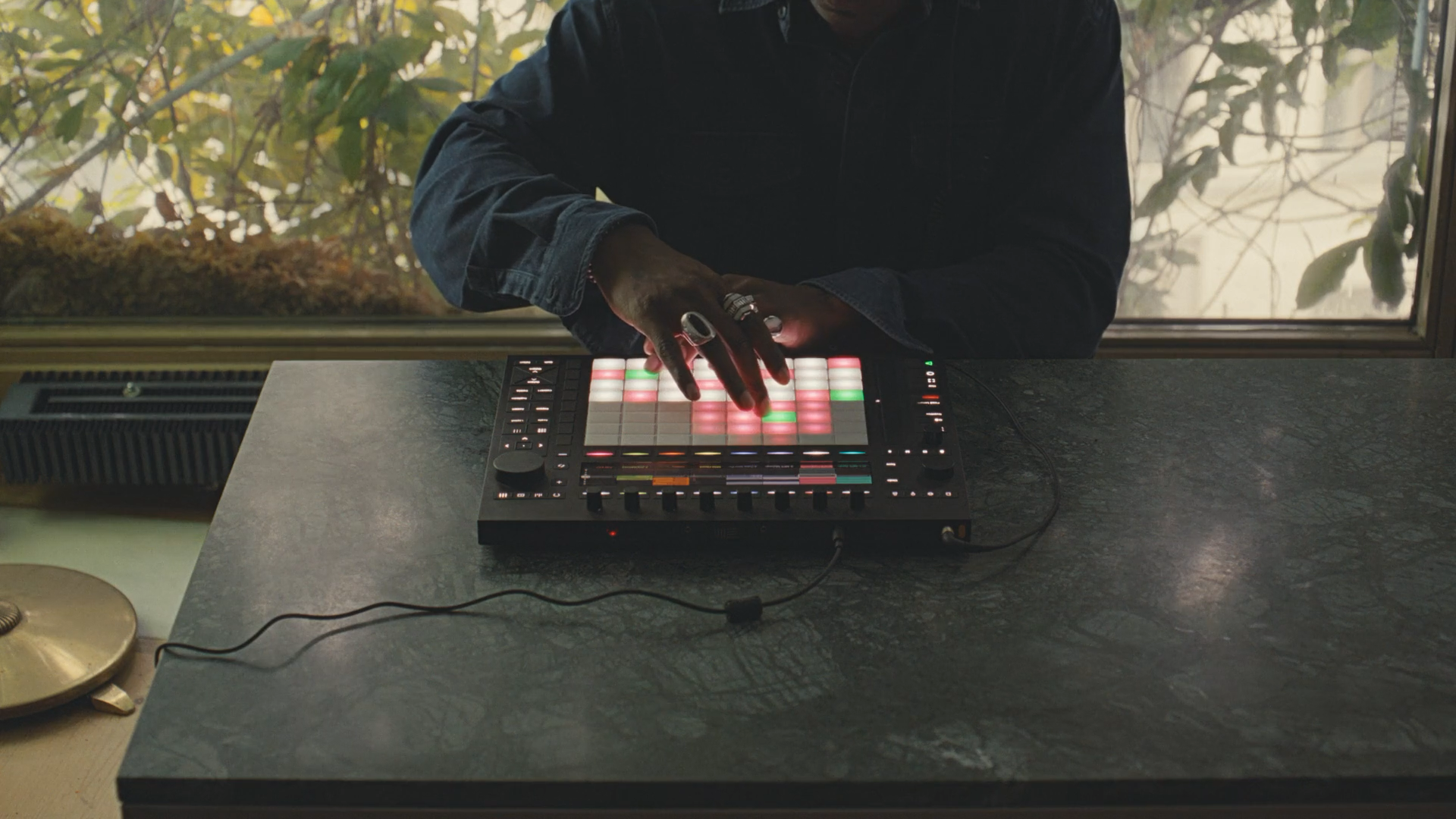
Image: Ableton (official website)
Push used to be "the Ableton Live controller." With Push 3, it became a standalone instrument that needs no computer at all — there's an Intel CPU, an SSD, and a battery inside, so you can take your entire Live environment to the sofa, the park, or the stage. It has been one of the most talked-about pieces of hardware since its announcement.
But the moment you try to buy one, the questions pile up. The standalone version costs USD 1,799 at the official shop, while the controller version is USD 999 — almost half. And in the same price bracket sit two powerful standalone rivals: AKAI's MPC and NI's Maschine.
Based on Ableton's official specs and pricing (checked July 2026), this guide from the Beat Lab editorial team covers what Push 3 actually delivers, which version to buy, and a full Push 3 vs MPC vs Maschine comparison table.
What Push 3 is — from "a controller for Live" to "an instrument with Live inside"
Push 3 is a pad instrument designed as one system with Ableton Live. All 64 pads support MPE (MIDI Polyphonic Expression): each pad senses pitch, slide, and pressure, so finger gestures become part of the recorded performance. That is the single biggest differentiator against the 16-pad MPC and Maschine.
There's also a built-in audio interface — plug in a guitar, synth, or dynamic mic and record straight into your set, or drive a modular rig via the CV/Gate outputs. Since Live 12.3 and Push software 2.3, sampling on the hardware has been upgraded too, including stem separation (isolating vocals, drums, bass and more) and slice editing directly on the grid. The "standalone Push" keeps getting more complete every year.
Ableton's official introduction video is the fastest way to grasp what this hardware can do.
Video: official Ableton YouTube channel
Standalone vs controller — specs and pricing
Push 3 comes in two configurations. The playing surface — 64 pads, encoders, built-in audio interface — is identical. The only real difference is whether there's a computer inside.
| Standalone | Controller | |
|---|---|---|
| Operation | Runs on its own (no computer) — also works as a Live controller | Connects to Live on your computer |
| Processor | Intel 11th Gen Core i3-1115G4, 8GB RAM | None (your computer does the work) |
| Storage | Built-in 256GB SSD | None |
| Battery | Built-in lithium battery, up to approx. 2.5 hours | None (USB/mains powered) |
| Pads | 64 expressive MPE-capable pads (both versions) | |
| Audio I/O | Built-in audio interface, balanced outputs, CV/Gate and MIDI (both versions) | |
| Upgrade path | — | Add the processor, battery, and SSD later with the official Upgrade Kit |
| Official price | USD 1,799 | USD 999 |
Specs and prices from the official Ableton shop, checked July 2026 (the standalone version was reduced from its USD 1,898 list price at the time of checking). Prices change — always confirm on the store page. Every Push includes Live 12 Intro for free; Push 3 requires Live 11.3 or later.
Verdict: if in doubt, buy the controller and add the Upgrade Kit later
The price gap is about USD 800. What tips the decision is that the controller version can be converted into a full standalone unit later with the official Upgrade Kit (the older Push 2 cannot).
- You produce at a desk with your computer → the controller version is all you need. Put the savings toward Live Suite or plugins — that will improve your music more.
- You want to work away from the computer or play live → buy the standalone from the start. Battery power (about 2.5 hours) and a laptop-free stage rig are the whole point.
- You're not sure → start with the controller, add the Upgrade Kit if and when you need it. No MPC or Maschine offers this "decide later" path.
Comparison table: Push 3 vs MPC vs Maschine — which standalone box to choose?
The question that always comes up: "How does it stack up against MPC and Maschine?" Here are the four main contenders on the same axes (feel free to cite this table with a link back).
| Ableton Push 3 Standalone | Ableton Push 3 Controller | AKAI MPC One G2 | NI Maschine MK3 | |
|---|---|---|---|---|
| Standalone | Yes (Live environment inside) | No (Yes via Upgrade Kit) | Yes (MPC3 OS) | No (the higher-end Maschine+ is) |
| Pads | 64 MPE pads (built for expression) | 16 pads (the classic MPC feel) | 16 large pads | |
| DAW integration | Fully unified with Ableton Live (Live only) | MPC software / plugin mode with any DAW | Ships with Maschine 3 software + Komplete Select | |
| Audio I/O | Built-in interface, CV/Gate, MIDI | I/O plus USB-C expansion, MIDI, CV/Gate | Built-in 24-bit/96kHz interface | |
| Battery | Yes (approx. 2.5 h) | — | No (the MPC Live III has one) | — |
| Price (approx.) | USD 1,799 | USD 999 | around USD 999 | around USD 500–600 |
| Best for | Live users who play out or produce away from the desk | Live users producing at the computer | Self-contained beatmaking, no DAW required | Budget entry with a big bundled library |
Push 3 prices from the official Ableton shop (July 2026); MPC and Maschine street prices are approximate — see stores for current figures. For a deeper dive into the AKAI and NI machines, read our Maschine vs MPC comparison.
The key insight: Push 3's standalone mode is "your Live environment to go," not a replacement for Live. Sets you sketch standalone are meant to be handed back to Live for finishing. An MPC, by contrast, is built to take a track from sampling to final mix entirely on the box. Both say "standalone" on the tin, but the philosophies are opposites — our Maschine vs MPC guide covers the other side of that fence in detail.
Should you buy it if you don't use Ableton Live? Honestly — no
Let's be direct: Push 3 is a device for people who produce in Ableton Live (or are about to make Live their main DAW).
- The workflow, screen, and device handling are all designed around Live. If you're an FL Studio or Logic user buying it as a generic MIDI controller, you won't get anything close to your money's worth.
- For Live users, though, the integration is untouchable: clip launching, step sequencing, automatic device mapping, and seamless hand-off between standalone and the computer.
- If you haven't picked a DAW yet, do that first — our DAW comparison guide will tell you whether Live suits how you work. Then come back to Push 3.
Buy it if you…
- Produce in Ableton Live and want to move from mouse-editing to "playing" your music
- Want MPE expression (per-pad pitch, slide, pressure) in your performances
- Want a laptop-free live performance rig
- Like working between the sofa, the road, the studio, and your computer
Skip it if you…
- Are committed to a DAW other than Live
- Want a beat machine that finishes tracks entirely on its own (get an MPC)
- Have a USD 300–700 budget for a pad-based setup (Maschine MK3 or a good MIDI keyboard will take you far)
- Need long battery life on stage (Push 3 tops out around 2.5 hours)
FAQ
Q1. What's the difference between the standalone and controller versions?
A. The hardware controls are identical — 64 MPE pads, encoders, built-in audio interface. The standalone adds an Intel 11th Gen Core i3-1115G4 with 8GB RAM, a 256GB SSD, and a battery (up to about 2.5 hours), so it runs without a computer. The controller connects to Live on your computer and can be upgraded to standalone later with the Upgrade Kit.
Q2. Can I use Push 3 without owning Ableton Live?
A. Every Push includes Live 12 Intro for free, so you can start without owning Live. It requires Live 11.3 or later, and the whole workflow assumes Live — it's not recommended for users of other DAWs.
Q3. Can the controller version be upgraded to standalone later?
A. Yes. Install the official Upgrade Kit (processor, battery, SSD) and it becomes identical to a factory standalone unit. The older Push 2 cannot be upgraded.
Q4. Push 3, MPC, or Maschine — which should I choose?
A. Live users: Push 3, the integration is unmatched. Want a fully self-contained beat machine: MPC (One G2 and up). Lowest cost of entry with a bundled library for computer production: Maschine MK3. Think of Push 3's standalone mode as "taking Live with you" and the choice gets easy.
Verdict: the strongest "next purchase" for Ableton Live users
Push 3 can genuinely change how you make music in Live. MPE-capable 64-pad expression, a built-in audio interface, and standalone operation — no other device lets you carry your Live environment out the door.
The buying logic is simple: computer-based producers take the controller (USD 999), performers and away-from-desk producers take the standalone (USD 1,799), and the undecided take the controller plus the Upgrade Kit later. And if you don't use Live, start with the DAW question and the MPC/Maschine comparison first.